
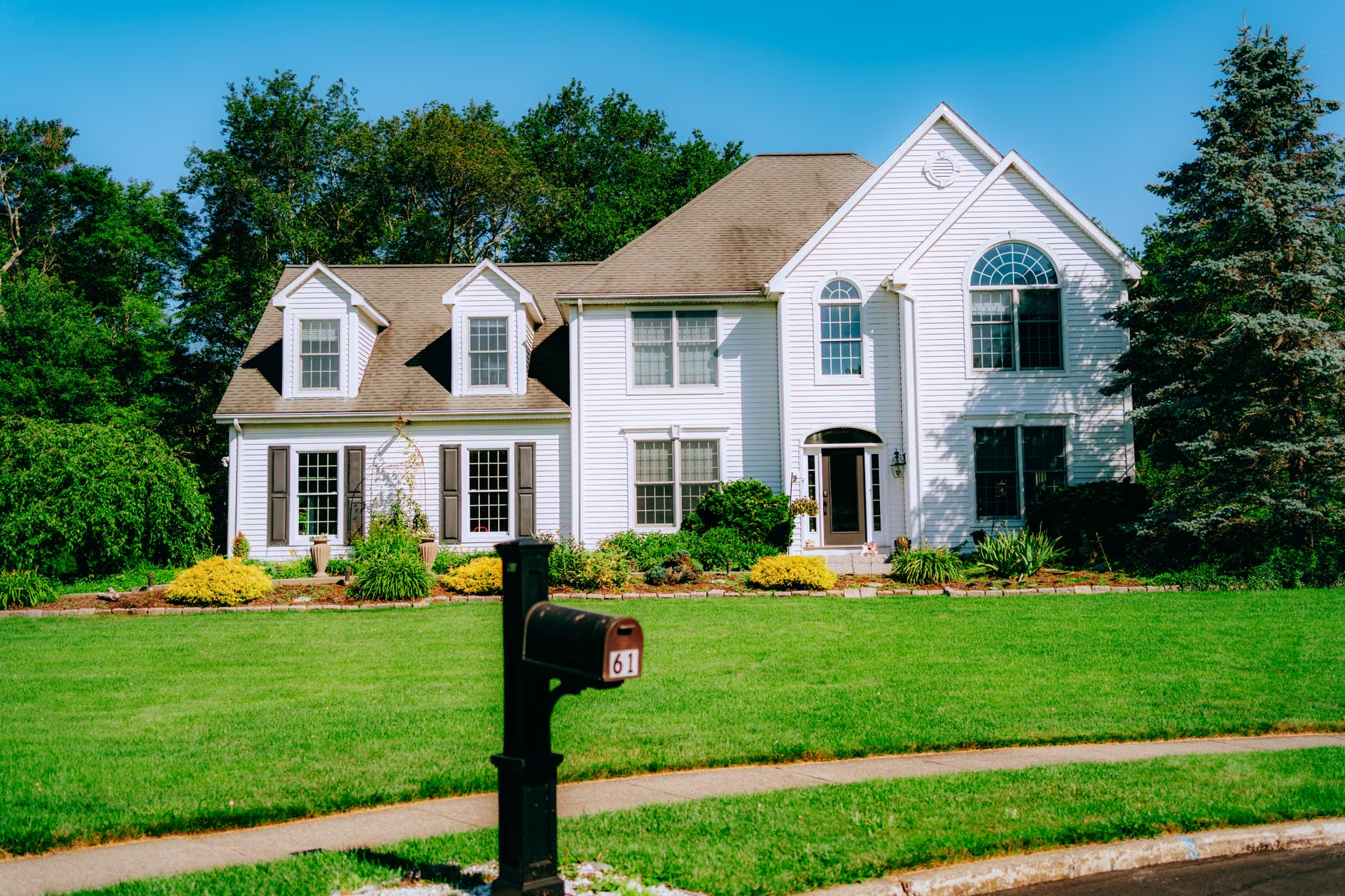
Most weekend-eating yards are not failing because the owners are lazy. They are failing because the design keeps generating the same jobs: mowing too much turf, edging too many borders, dragging hoses to thirsty plants, and pulling weeds from thin beds that never really fill in.
That is why low-maintenance landscaping is less about finding a magical plant and more about removing recurring work. The biggest gains usually come from shrinking unused lawn, grouping plants by water needs, covering soil so weeds have fewer openings, and automating the irrigation that still makes sense. EPA WaterSense notes that lawns generally need more supplemental water and maintenance than other vegetation, and that grouping plants with similar watering needs into hydrozones improves watering efficiency. (epa.gov)
TL;DR
- The fastest way to cut landscape work is to reduce unnecessary turf, simplify bed shapes, and stop leaving large areas of bare soil.
- Choose plants for the actual site conditions, not just for looks. Hardiness zone is only the starting point.
- Mulch, denser planting, and drip irrigation do more to reduce maintenance than most single plant swaps.
- Expect a setup period. Even native or drought-tolerant plants need establishment care before they become easy to manage.
Start by cutting recurring jobs, not by hunting for “no-maintenance” plants
A useful way to think about the yard is as a set of labor loops. Turf creates mowing, edging, and often irrigation. Overcrowded foundation beds create pruning. Sparse beds create weeding. Delicate annual color creates seasonal replanting. A lower-maintenance yard is simply one with fewer loops running every week or every month.
That is also why low-maintenance does not have to mean gravel everywhere, and it does not have to mean xeriscaping unless the climate truly calls for it. EPA treats water-smart landscape design as a broad approach, while xeriscaping is specifically associated with arid and semi-arid conditions. A planted yard can still be easy to care for if the structure is doing most of the work. (epa.gov)
Use a maintenance-load audit to decide what to change first
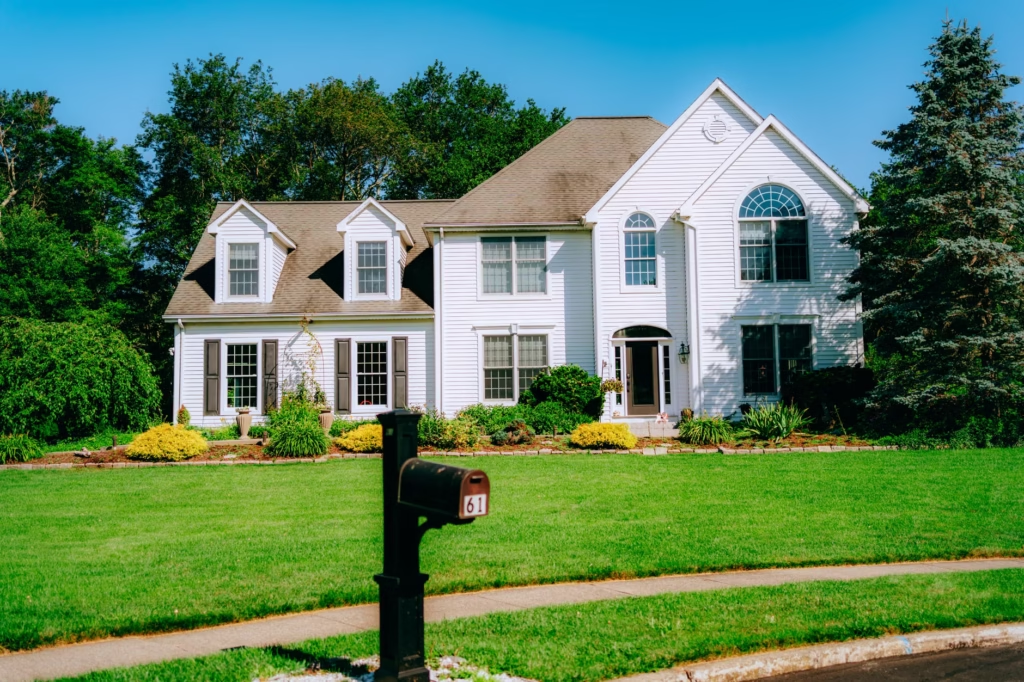
Before buying plants or tearing out lawn, walk the property and score each area. This “maintenance-load audit” is an editorial decision tool, not an industry standard, but it helps busy homeowners see where redesign will save the most time.
- Give each zone a point for every ongoing task it creates: mowing, edging, regular watering, frequent weeding, pruning, or seasonal cleanup.
- Add another point if the area is awkward to reach, such as a narrow side strip, steep slope, or tight curve around utilities or trees.
- Add another point if it only looks good when maintained precisely, such as clipped foundation shrubs or small lawn ribbons along walkways.
- Subtract a point if the area has a real function: play space, dog run, outdoor seating, a main path, or a view corridor that genuinely matters.
- Start redesign with the zones that still score highest. Those are usually the places where labor is out of proportion to usefulness.
This method often changes priorities. Many homeowners assume the answer is to find easier flowers. The audit usually shows that the real offenders are low-use lawn, overcomplicated bed lines, and plants that never matched the site in the first place.
The low-maintenance moves that save the most time
Keep lawn only where it earns its keep
If a section of grass is not being used for recreation, circulation, pets, or a deliberate visual opening, it is probably a maintenance expense disguised as open space. The biggest practical win for many households is not eliminating all turf, but reducing it to one or two simple shapes that are easy to mow and water. EPA WaterSense advises using turf where it has a practical function and notes that lawns generally require more supplemental water and maintenance than other landscape vegetation. Grouping turf into simpler zones also improves watering efficiency. (epa.gov)
Match plants to the real site, not the fantasy site
“Right plant, right place” sounds basic, but it is the difference between a stable landscape and a permanent rescue mission. Start with the USDA Plant Hardiness Zone Map, because it is the standard national reference for perennial survival, but do not stop there. USDA also notes that no hardiness zone map replaces what gardeners learn from the actual site. Sun, reflected heat, wind, roof overhangs, drainage, and soil moisture matter just as much. UF/IFAS guidance points out that matching plants to the natural moisture and light conditions of a site can reduce or eliminate unnecessary irrigation or drainage. (planthardiness.ars.usda.gov)
This is where busy homeowners save themselves from some of the most avoidable work. A plant that is technically hardy but wrong for the exposure or soil becomes a repeat customer for water, fertilizer, pruning, staking, and replacement.
Make planting beds bigger, simpler, and more densely planted
Low-maintenance landscapes usually have fewer skinny beds and fewer fussy outlines. Wider, cleaner planting zones allow plants to knit together and shade the soil. University of Maryland Extension’s native landscape designs explicitly frame lawn reduction as a way to cut maintenance, and note that more plant coverage means fewer weeds can germinate and less mulch is needed over time. The same guidance favors cohesive groupings rather than cluttered collections of one-of-everything. (extension.umd.edu)
In practical terms, that often means using durable shrubs, ornamental grasses, and groundcovers as the backbone, then limiting higher-maintenance seasonal color to a few high-visibility spots near the entry or patio. EPA’s plant-selection guidance is regional for a reason: plants that suit the local climate can need minimal, if any, supplemental watering once established. (epa.gov)
Use mulch as a weed-control layer, not a decorative sprinkle
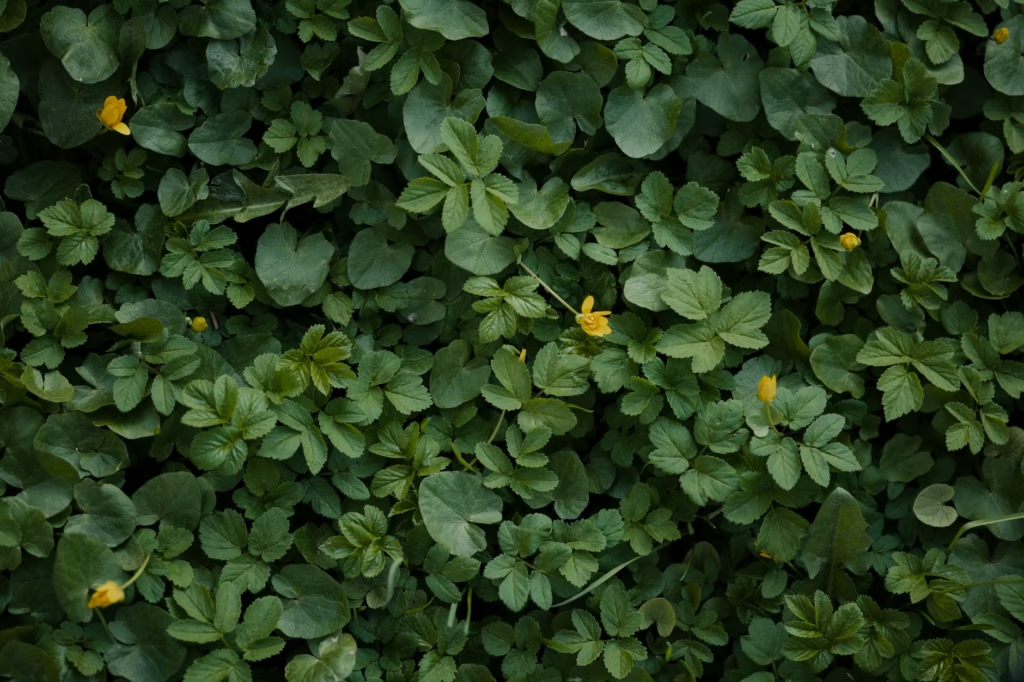
Mulch is one of the few maintenance reducers that works in almost every style of yard, but only when applied correctly. Utah State University Extension recommends organic mulch at about 3 to 4 inches deep and inorganic mulch at about 2 to 3 inches, while leaving a few inches clear around the base of woody plants to reduce disease and damage risk. UNH Extension also notes that mulch helps conserve moisture, reduce weed competition, and protect plantings from mower or string-trimmer injury. (extension.usu.edu)
A light dusting of mulch is mostly visual. A real weed-suppressing layer changes how much sunlight reaches the soil surface and how quickly the bed dries out between rains.
Automate watering where it matters
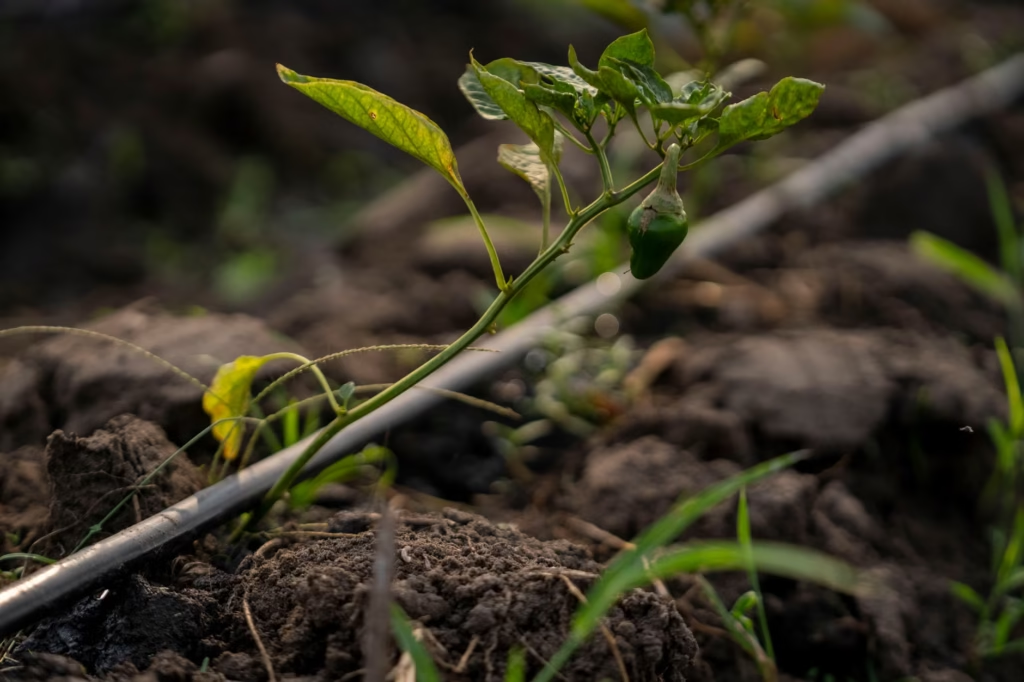
If irrigation is staying, it should match the planting rather than fight it. EPA WaterSense recommends microirrigation for gardens, shrubs, and trees because it applies water slowly where roots need it, and UF/IFAS describes microirrigation as an efficient system that can be customized to plant type, soil, and layout. EPA also recommends adjusting irrigation seasonally, checking systems monthly for leaks or clogged heads, and considering WaterSense-labeled weather-based or soil-moisture-based controllers to reduce waste. (epa.gov)
Use hardscape strategically for problem zones
Not every difficult area should stay planted. Narrow side yards, trash-can pads, utility access paths, and tiny strips that are impossible to mow cleanly are often better handled with a simple path, pavers, gravel, or another durable surface plus one or two structural plants. The point is not to pave the whole yard. It is to stop forcing high-care planting into places that never wanted to be garden beds.
Which upgrade fits which problem?
| If this is the time drain | Best low-maintenance move | Why it helps | Main watch-out |
|---|---|---|---|
| A low-use lawn that still gets mowed weekly | Reduce turf to one functional shape and enlarge beds | Cuts mowing, edging, and usually irrigation | Keep enough open space for the uses that actually matter |
| Beds full of gaps and constant hand-weeding | Plant more densely and mulch correctly | Shades soil and gives weed seeds fewer openings | Do not crowd plants past their mature size |
| Foundation shrubs that need repeated shearing | Replace with fewer, slower, site-appropriate structure plants | Creates a cleaner look with less trimming | Read mature width before planting |
| Dry beds or slopes that need frequent hose time | Hydrozone plants and convert to drip or microirrigation | Puts water at the root zone instead of on pavement or empty space | New plantings still need close monitoring at first |
| Awkward side yards or service areas | Use a simple hardscape zone with minimal planting | Eliminates hard-to-reach mowing and muddy access | Plan drainage and maintenance access before installation |
The pattern is consistent: the biggest maintenance savings come from layout decisions. Plant choice matters, but it matters most after the structure of the yard stops creating unnecessary chores.
A realistic phased makeover for a busy household
Consider a hypothetical suburban lot with a broad front lawn, narrow foundation beds, a hot strip by the driveway, and a shady side yard where grass always struggles. A low-maintenance makeover does not need to start as a full redesign. The first phase could keep one useful turf area, widen the foundation beds so they can hold layered planting, convert the hot driveway strip to mulch plus tough, site-appropriate plants on drip, and turn the shady side yard into a path or service zone with a few shade-adapted plants.
That approach also respects one of the most overlooked realities: establishment care. Newly planted shrubs and trees need more frequent watering than established ones, so replacing the entire yard at once can create a temporary maintenance spike. Smaller phases let the homeowner concentrate on the new work without losing control of the rest of the property. If mature trees are part of the lawn-removal area, the transition needs even more care. Colorado State University Extension warns that existing trees may still need supplemental irrigation during a xeriscape conversion, sometimes for years depending on species and conditions. (extension.umn.edu)
Common mistakes that add work back into the yard
- Treating landscape fabric as a permanent weed fix. UNH Extension and UC IPM both note that weeds can still grow in the soil or mulch that accumulates above fabric, roots can penetrate it, and long-term removal can become difficult. (extension.unh.edu)
- Choosing plants by appearance alone. A plant can be hardy in your zone and still fail because of bad drainage, too much sun, too little light, or the wrong moisture conditions. (planthardiness.ars.usda.gov)
- Under-mulching or piling mulch against stems and trunks. Extension guidance supports a real mulch layer and a mulch-free space around woody plants to reduce disease and damage risk. (extension.usu.edu)
- Expecting native or drought-tolerant plants to be maintenance-free immediately. EPA and university extension sources make clear that water-smart plants still need establishment care before they become easy to live with. (epa.gov)
- Buying regionally invasive ornamentals because they are widely sold. Federal and university sources note that invasive plants are nonnative species that can cause harm, and some ornamental introductions spread into natural areas after leaving the nursery trade. (invasivespeciesinfo.gov)
A two-weekend action plan
- Map the yard by use and by condition. Note where lawn is actually used, where sun and shade fall, where water stands, where soil stays dry, and where maintenance is awkward. The USDA hardiness zone is a starting point, not a substitute for this site map. (planthardiness.ars.usda.gov)
- Run the maintenance-load audit and identify the top one or two problem zones. Resist the urge to redesign everything at once.
- Choose the right conversion for each problem area: lawn reduction, wider beds, denser planting, drip irrigation, or hardscape for awkward utility space.
- Figure out irrigation before you plant. If a bed will stay irrigated, plan hydrozones and microirrigation first, not after the plants are in the ground. (epa.gov)
- Source plants from local Cooperative Extension recommendations, native plant programs, or other region-specific resources instead of buying whatever looks good at the garden center that day. (extension.umd.edu)
- Plant in phases and put establishment care on the calendar. The yard gets easier after plants root in; it does not start easy on day one. (extension.umn.edu)
Before removing major lawn areas or letting a landscape look more naturalized, check local rules and any HOA requirements. EPA specifically suggests reviewing HOA requirements or covenants when communities want more water-efficient landscape choices. (epa.gov)
The goal is a yard that stays attractive without constant intervention
The most successful low-maintenance landscapes are not empty, and they are not improvised. They are edited. They keep lawn where it has a job, put durable plants where the site supports them, cover soil so weeds lose their invitation, and automate water instead of applying it by habit. For a busy homeowner, that is the real upgrade: not a yard that never needs attention, but one that no longer asks for attention all the time.
Frequently asked questions
Is low-maintenance landscaping the same as xeriscaping?
Not necessarily. Xeriscaping is most specifically associated with arid and semi-arid conditions, while low-maintenance landscaping is a broader idea. A humid-climate yard can still be low-maintenance if it uses less unnecessary turf, better plant siting, efficient irrigation, and simpler bed design. (epa.gov)
Do native plants mean I will never have to water?
No. Native and regionally appropriate plants can reduce long-term water demand, and EPA notes that suitable plants may need little water beyond rainfall once established. But newly planted shrubs, trees, and perennials still need establishment care, and some sites remain dry or stressful enough to need occasional supplemental water. (epa.gov)
How much lawn should a busy household keep?
Keep the amount of turf that has a real function. If the grass serves as a play area, dog space, path, or intentional open visual zone, it may be worth keeping. If it exists mainly because that is what was installed originally, it is often the easiest place to cut labor. EPA WaterSense explicitly recommends using turf where it has a practical function. (epa.gov)
Is landscape fabric a good shortcut for weed control?
In ornamental planting beds, it is often less helpful than homeowners expect. University extension and UC IPM sources note that weeds can still establish in mulch or soil above the fabric, and roots can grow through it, making later cleanup harder. A better long-term approach is healthy plant coverage, proper mulch depth, and early weed control while the bed fills in. (extension.unh.edu)
When should a homeowner call a professional?
A phased planting conversion is reasonable for many homeowners, but major grading, drainage changes, retaining walls, large tree protection issues, or irrigation redesign can justify professional help. EPA also notes that a certified irrigation professional can design, maintain, or audit a system to support efficient watering. (epa.gov)
References
- US EPA Watering Tips - https://www.epa.gov/watersense/watering-tips
- US EPA Landscaping Tips - https://www.epa.gov/watersense/landscaping-tips
- US EPA Water-Smart Landscape Design - https://www.epa.gov/watersense/water-smart-landscape-design
- US EPA Technical Sheet: Landscape Design and Plant Selection - https://www.epa.gov/system/files/documents/2023-08/ws-homes-TRM-13-LandscapeDesignandPlantSelectionTechSheet.pdf
- USDA Plant Hardiness Zone Map - https://planthardiness.ars.usda.gov/
- UF/IFAS Extension: Right Plant, Right Place - https://ask.ifas.ufl.edu/publication/EP416
- University of Maryland Extension: Landscape Designs with Native Plants - https://extension.umd.edu/resource/landscape-designs-native-plants
- Utah State University Extension: Water-Wise Landscaping - Mulch - https://extension.usu.edu/yardandgarden/research/water-wise-landscaping-mulch
- UF/IFAS Extension: Microirrigation or Drip Irrigation for Home Landscapes - https://ask.ifas.ufl.edu/publication/AE524
- UNH Extension: Should I Use Landscape Fabric to Keep Weeds Out of My Perennial Garden? - https://extension.unh.edu/blog/2019/05/should-i-use-landscape-fabric-keep-weeds-out-my-perennial-garden
- UC Statewide IPM Program: Weed Management in Landscapes - https://ipm.ucanr.edu/home-and-landscape/weed-management-in-landscapes/
- Colorado State University Extension: Xeriscaping - Retrofit Your Yard - https://extension.colostate.edu/resource/xeriscaping-retrofit-your-yard/