

The best patio furniture for your home is usually the set that solves your weather problem first. A dining set that looks perfect in a showroom can fail quickly outside because outdoor materials are stressed by sunlight, water, weathering, and corrosive conditions such as salt exposure. Climate should narrow your choices before color, shape, or trend does. (research.fs.usda.gov)
Start with the conditions on your patio, not just your region
A humid, shaded porch in Atlanta and a full-sun roof deck in Denver create different problems, even if both are simply called outdoor spaces. Before comparing materials, look at the actual exposure. Outdoor performance is shaped by water, sunlight, weathering, and how long surfaces stay damp. That means the microclimate on your patio matters almost as much as the broader climate on the map. (research.fs.usda.gov)
- Does the furniture sit in direct afternoon sun for most of the season?
- After rain or morning dew, do surfaces stay wet for hours?
- Are you close enough to the coast, or exposed to winter road salt, that metal takes a beating?
- Will the furniture stay outside through freezing weather?
- Is the space open enough that wind can shift chairs, topple umbrellas, or slam lightweight pieces around?
Those answers tell you where to spend money. If the main issue is sun, fabric and finish quality move to the top of the list. If the main issue is damp air or salt, frame material and hardware matter more. If winter storage is difficult, pieces that dry quickly, stack easily, or tolerate a well-fitted cover usually make more sense than bulky furniture that stays wet inside the cushions. (research.fs.usda.gov)
The material choice is really a climate choice
For many households, powder-coated aluminum is the safest default. NOAA guidance explains that aluminum normally protects itself with an oxide layer, which is a big reason it tends to handle outdoor exposure better than ordinary unprotected steel. The limit is that salt still matters. In salty environments, that protection becomes less reliable, so finish quality, hardware quality, and occasional rinsing still count. (ngs.noaa.gov)

Wood is a better choice when the goal is warmth, weight, and a more natural look, but it only makes sense if the upkeep matches the climate. The USDA Wood Handbook describes teak heartwood as having good resistance to weathering, excellent dimensional stability, and high natural durability. Even so, USDA finishing guidance is clear that outdoor wood protection is mainly about managing water, sunlight, and weathering. In practice, teak can be a strong climate match, but not a maintenance-free one. (fpl.fs.usda.gov)
Steel and wrought iron still have a place, especially on exposed patios where weight helps keep furniture stable. The tradeoff is that corrosion risk rises as conditions get wetter and saltier. That does not mean steel is a bad material. It means scratches, chipped coatings, and neglected hardware matter much more in coastal or rainy climates than they do on a covered inland patio. (ngs.noaa.gov)
Do not treat cushions as an afterthought. In strong sun, they often fail long before the frame does. Sunbrella explains that its solution-dyed acrylic fabrics are saturated with color and UV-stabilized pigments before the yarn is made, which is why this fabric type is commonly used as a benchmark for fade resistance outdoors. In humid climates, the next question is just as important: how fast does the cushion dry, and can the cover be removed and cleaned? (sunbrella.com)
Quick calls for common climates
- Hot, sunny, and dry: Prioritize UV-resistant fabric and surfaces that will still look decent after long sun exposure. Aluminum and teak are usually easier long-term bets than bargain steel sets, and solution-dyed acrylic cushions are worth seeking out. (ngs.noaa.gov)
- Humid and rainy: Prioritize drainage and dry-down. Aluminum frames, well-maintained teak, slimmer cushions, and removable covers usually make more sense than thick cushions that stay damp. Outdoor wood performance depends heavily on water and weathering control. (ngs.noaa.gov)
- Coastal: Treat salt as its own climate problem. Salt makes water a better electrolyte and increases corrosion risk, so inspect hardware closely, favor corrosion-resistant frames, and expect more cleaning. Teak and aluminum are often easier to live with here than low-cost steel. (ngs.noaa.gov)
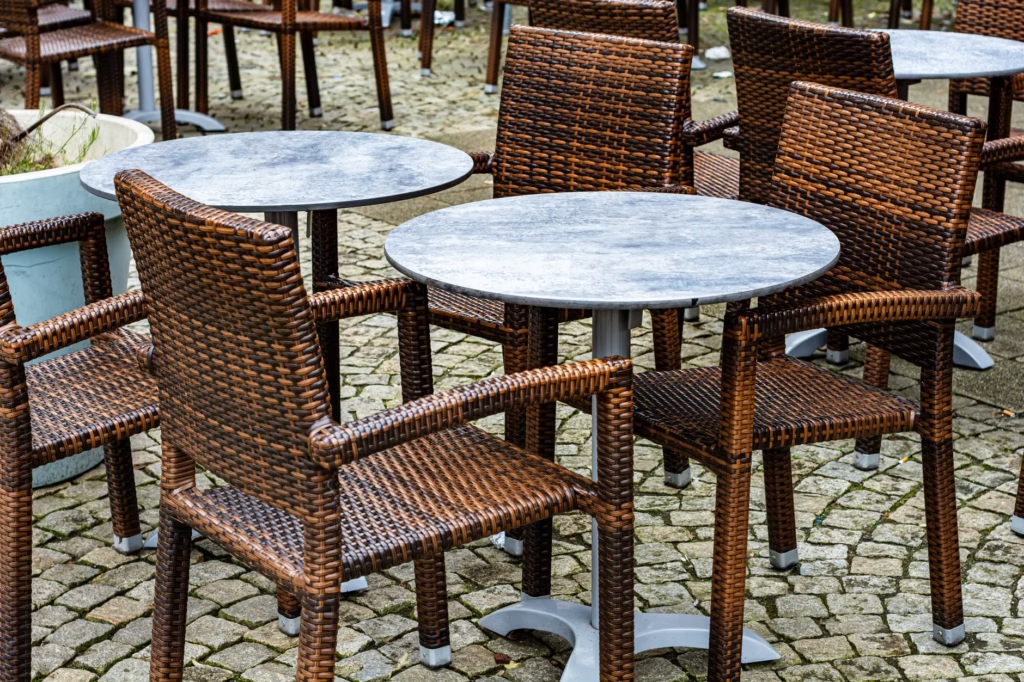
- Cold, snowy, or windy: Buy for storage and stability as much as material. Heavier furniture can help in windy spaces, but trapped moisture, neglected finishes, and outdoor cushions left out all winter will shorten the life of almost any set. Stackability and indoor cushion storage can matter more than a premium frame. (research.fs.usda.gov)
A short buying checklist before you order
- Name the biggest stress on your patio: sun, dampness, salt, cold, or wind.
- Choose the frame material to solve that stress first.
- Then judge the soft parts: fabric type, cushion thickness, dry time, and cleanability.
- Inspect the weak points before style details: finish chips, exposed hardware, moving joints, and weld quality.
- Decide now where cushions and covers will live during storms or the off-season.
A simple hypothetical example shows how this works. On a humid Gulf Coast patio, a modest powder-coated aluminum set with removable solution-dyed cushions is often a better fit than a heavy steel set with deep boxed cushions. On a windy but covered mountain deck, that answer may flip because weight and movement control matter more than corrosion. The best choice is not the most expensive material. It is the one that matches the local failure point. (ngs.noaa.gov)
If there is one rule worth keeping, it is this: buy for the weather that destroys furniture in your area first, and buy for style second. That usually leads to fewer regrets, less maintenance, and a patio that still looks intentional after a few seasons.
References
- USDA Forest Service - Chapter 16: Finishing Wood - https://research.fs.usda.gov/treesearch/62269
- USDA Forest Products Laboratory - Wood Handbook: Wood as an Engineering Material - https://www.fpl.fs.usda.gov/documnts/fplgtr/fplgtr282/fpl_gtr282.pdf
- NOAA National Geodetic Survey - Geodetic Bench Marks - https://www.ngs.noaa.gov/PUBS_LIB/GeodeticBMs/
- Sunbrella - The Sunbrella Fabric Difference - https://www.sunbrella.com/sunbrella-fabric-difference