
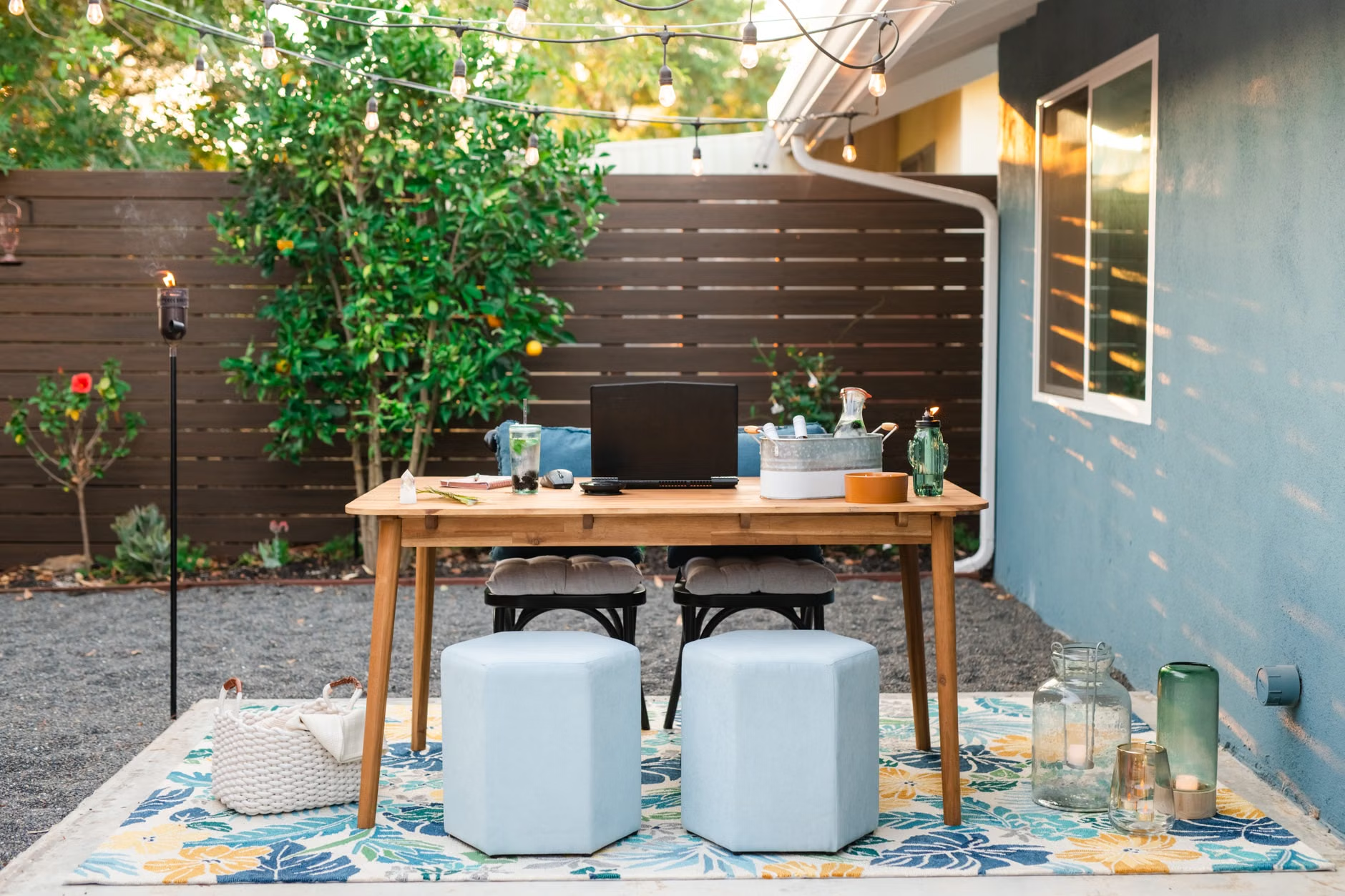
A good one-weekend patio makeover is less about doing everything and more about changing the right things. The spaces that improve fastest usually do not need demolition, new footings, or custom carpentry. They need a cleaner surface, a better furniture layout, stronger visual edges, and a few comfort upgrades that make the patio usable from morning coffee to late evening. If the space already has a solid base, a weekend is enough to make it look more deliberate, more welcoming, and more expensive than it really was.
That is also the limit to respect. A makeover is not the same as a repair. Replacing cracked structural elements, correcting drainage, rebuilding steps, or fixing a failing railing can easily swallow the whole weekend and still leave the patio unfinished. The most successful fast projects work with what is already there. They edit, clean, layer, and reframe the space instead of trying to reinvent it from scratch.
TL;DR
- Pick upgrades that change the patio’s feel without changing its structure.
- Start with the surface, because dirt, stains, and visual clutter make every other improvement look weaker.
- Rearrange furniture before buying more; better spacing often matters more than more pieces.
- Use vertical elements, lighting, textiles, and containers to make the space feel finished.
- Treat paint disturbance, outdoor power, grills, and structural problems as safety issues, not decor decisions.
Use the Fast-Impact Stack to decide what to change first
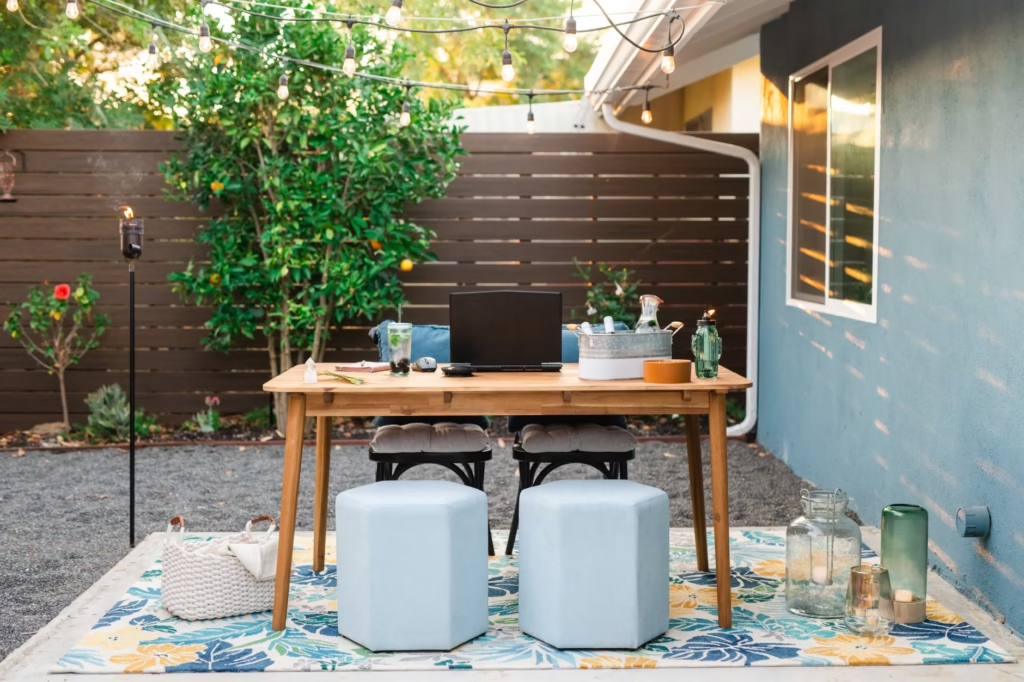
When time is short, it helps to diagnose the patio in layers instead of scrolling through random inspiration photos. A practical way to do that is what I’d call the Fast-Impact Stack: surface, layout, vertical edge, and comfort. If the surface is dirty or visually chaotic, start there. If the furniture does not support the way the space is actually used, fix the layout next. If the patio feels exposed, flat, or unfinished, add a vertical edge with screens, planters, or shade. Then finish with comfort: lighting, textiles, and a few objects that make the patio pleasant to stay in.
- Surface: clean, simplify, and visually anchor the floor plane.
- Layout: create a purpose, a focal point, and clear walking paths.
- Vertical edge: add privacy, height, or backdrop so the patio feels like a room.
- Comfort: soften the space with light, cushions, shade, and planting.
This order matters because people often start with accessories, then wonder why the patio still looks unfinished. A new lantern or throw pillow cannot rescue a grimy slab, awkward furniture spacing, or a space that feels exposed on all sides. Fix the big visual problems first, then layer in the smaller ones.
Start with the surface because every other upgrade sits on it
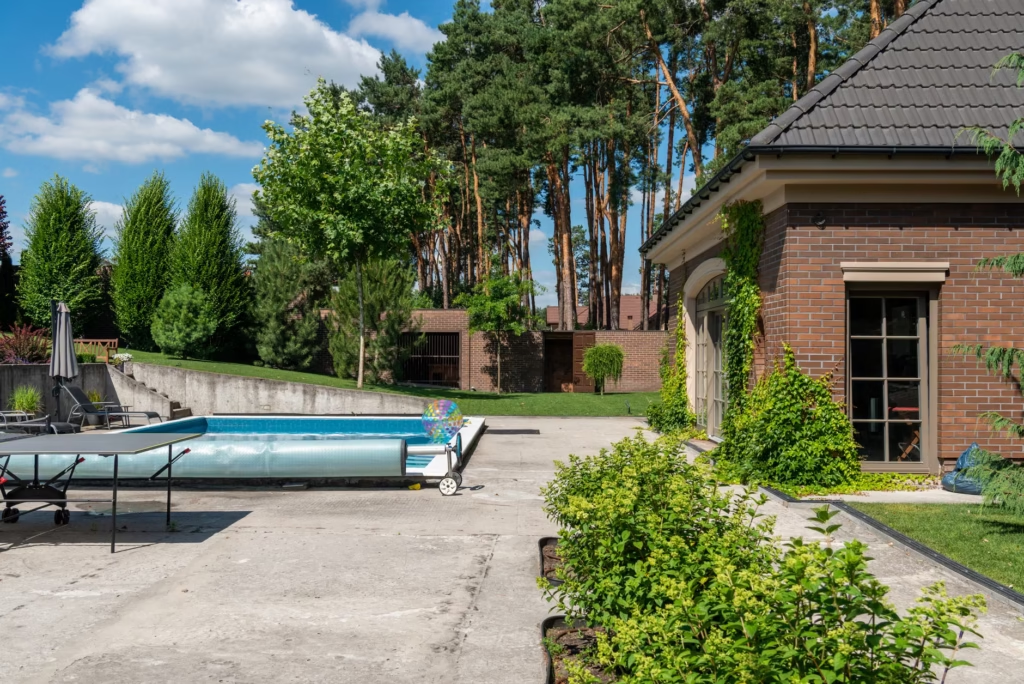
The fastest patio makeover is often the least glamorous one: clear everything off, sweep thoroughly, wash the surface, and remove anything that does not belong. That step alone can change how colors read, how large the patio feels, and whether new additions look crisp or temporary. On concrete or pavers, the difference between dusty and clean is dramatic. On wood decking, even a basic wash and a tighter furniture edit can make the space feel newly finished without opening a can of stain.
If the patio borders painted trim, railings, or siding on a home built before 1978, do not treat sanding or aggressive paint removal as a casual weekend chore. EPA says pre-1978 homes are more likely to contain lead-based paint, and disturbing painted surfaces can create hazardous dust; for covered projects, paid contractors generally need lead-safe certification. (epa.gov)
| Upgrade | Best when | Weekend effort | Biggest upside | Watch for |
|---|---|---|---|---|
| Deep clean and declutter | The patio feels dingy more than outdated | Low to moderate | Makes every later change look better | Can reveal stains, cracks, or repairs you had been hiding |
| Outdoor rug | The patio lacks a focal area or feels cold underfoot | Low | Defines a seating zone instantly | Needs the right size; too small makes the space look chopped up |
| Interlocking deck tiles | A plain slab feels harsh or visually flat | Moderate | Adds warmth and pattern without permanent construction | Needs a reasonably even base and clean edges |
| Painted furniture refresh | Chairs and tables are solid but visually tired | Moderate | High visual return for low material cost | Prep matters; rushed finishing shows quickly |
| Planter border or corner cluster | The patio feels exposed or unfinished at the edges | Low to moderate | Adds softness and height fast | Requires drainage, watering, and some restraint |
If only one floor-level upgrade is happening, choose the one that fixes the patio’s main weakness. A rug is better than deck tiles when the real problem is lack of definition. Deck tiles are better than a rug when the slab itself is what makes the space feel cold. A cleaning and decluttering pass is better than both when the patio is simply carrying too much visual noise.
Rework the layout before buying anything new
- Decide what the patio is mainly for this season: dining, lounging, morning coffee, container gardening, or entertaining. One clear purpose beats a vague mix of all of them.
- Measure the usable area, then preserve walking paths first. A small patio feels cramped less because of size than because chairs, planters, and side tables interrupt movement.
- Pull seating into a conversation grouping instead of pushing everything to the perimeter. Outdoor furniture arranged like a waiting room makes the space feel larger but less usable.
- Create one focal anchor. That can be a coffee table, a fire table, a rug, a long planter, or a pair of chairs facing the best view.
- Test the layout at the time of day the patio is actually used. Sun angle, wind, glare, and traffic patterns can make a smart-looking arrangement fail in real life.
Consider a hypothetical example: a 10-by-12 concrete patio with a grill, four lightweight chairs, and several small pots scattered around the edges. The instinct is often to add more. In practice, the space usually improves faster by subtracting first. Remove two weak chairs, place a modest rug in the center, angle a loveseat or two better chairs toward each other, move the grill to the least social edge, and group the containers into one corner or against one backdrop wall. The patio now reads as a room instead of a storage zone.
This is also where tradeoffs show up. A patio can be a better dining space or a better lounge space, but very small patios rarely do both equally well. If meals outdoors are occasional and relaxed seating happens every week, prioritize comfort over squeezing in a full dining set. Matching the layout to actual behavior is what keeps a quick makeover from feeling staged.
Vertical elements make a patio feel intentional faster than more furniture
Many patios feel unfinished not because they are too small, but because everything happens below waist height. A slab, a few chairs, and a table can look temporary even when the pieces are decent. Adding one or two vertical elements changes the proportions of the space. It gives the eye a stopping point, creates privacy, and helps the patio feel more like an outdoor room than a leftover patch beside the house.
- Use two tall planters to frame the outer corners of a seating zone.
- Set a freestanding lattice or slatted screen behind a bench to create backdrop and privacy.
- Add a market umbrella if the patio gets punishing afternoon sun and the table or stand can hold it securely.
- Hang outdoor curtains only if there is already a suitable structure; a weekend makeover is not the time to improvise unsafe overhead support.
- Use one vine trellis or one screening panel to hide a utility view, fence seam, or bare wall instead of trying to decorate every edge.
The restraint part matters. Too many small privacy fixes can make a patio feel boxed in and cluttered. One strong backdrop is usually more effective than several competing ones. If the area is windy, heavily exposed, or governed by HOA or rental restrictions, choose freestanding and movable pieces over anything that looks permanent.
Lighting is often the difference between a patio that looks decorated and one that gets used
A patio makeover that only works in daylight is unfinished. Good outdoor lighting does two jobs: it extends the useful hours of the space, and it softens everything after dark. The most inviting setups usually layer light instead of relying on one bright fixture. Ambient light can come from string lights or a wall fixture. Task light can come from a table lamp near seating or dining. Accent light can come from lanterns, planters, or low garden lights that define the perimeter.
Keep outdoor power simple and safe. CPSC says outdoor extension cords need jacketed construction and other safety characteristics because improper cords can create shock or fire hazards. Its outdoor-repairs guidance also recommends using cords that are undamaged, clearly labeled for outdoor use, and connected to grounded receptacles with GFCI protection for outdoor power. (cpsc.gov)
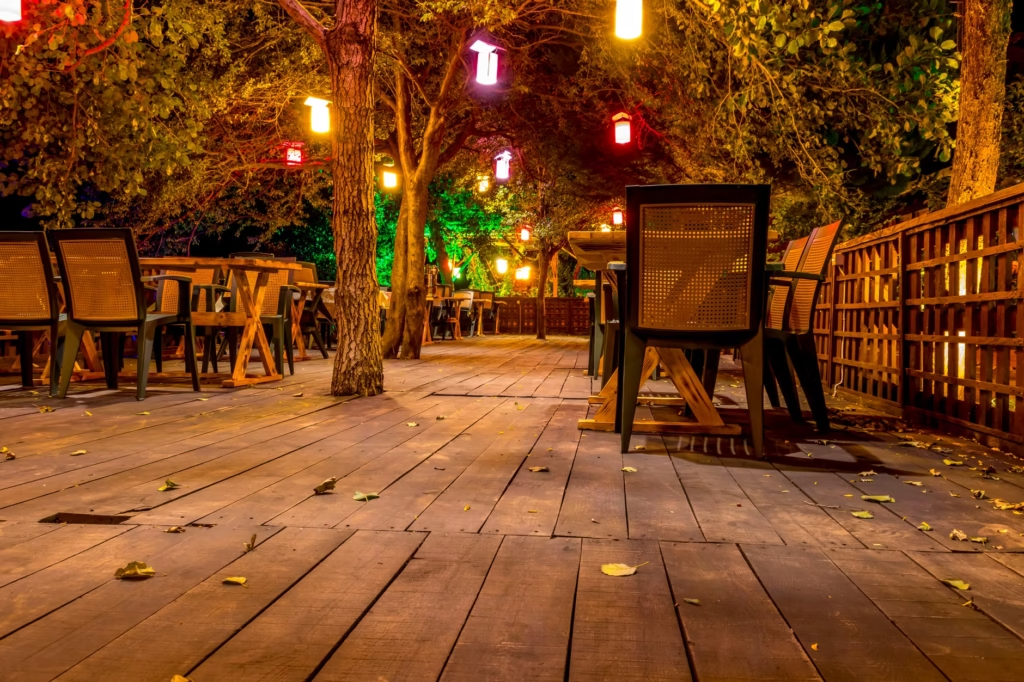
From a design standpoint, warm, lower-level light is usually kinder outdoors than one harsh overhead source. Rechargeable lamps work well on small patios because they add glow without visible cords. Solar lights are useful for edge definition, but they are best treated as supplements rather than the only light source. String lights have the strongest mood payoff, but they look best when hung with a clear plan instead of being zigzagged randomly across the space.
Textiles and containers add comfort faster than built-ins ever will
Built-in benches, masonry planters, and custom pergolas can be beautiful, but they are not weekend projects for most households. Cushions, seat pads, outdoor curtains, throws for cool evenings, and a few well-scaled planters usually deliver a much faster upgrade. These are the pieces that make the patio feel inhabited instead of merely arranged. They also let the space shift with the season instead of locking every decision in place.
With planters, fewer and larger usually looks better than many tiny pots. Grouping containers by color family or material also helps the patio feel designed. The practical piece matters just as much as the visual one: drainage holes are critical for most container displays because roots need air as well as water, and Illinois Extension specifically notes that putting gravel in the bottom of a pot does not solve poor drainage. If a decorative outer pot has no hole, use a liner pot inside it or a double-pot setup instead of planting directly into a sealed container. (extension.illinois.edu)
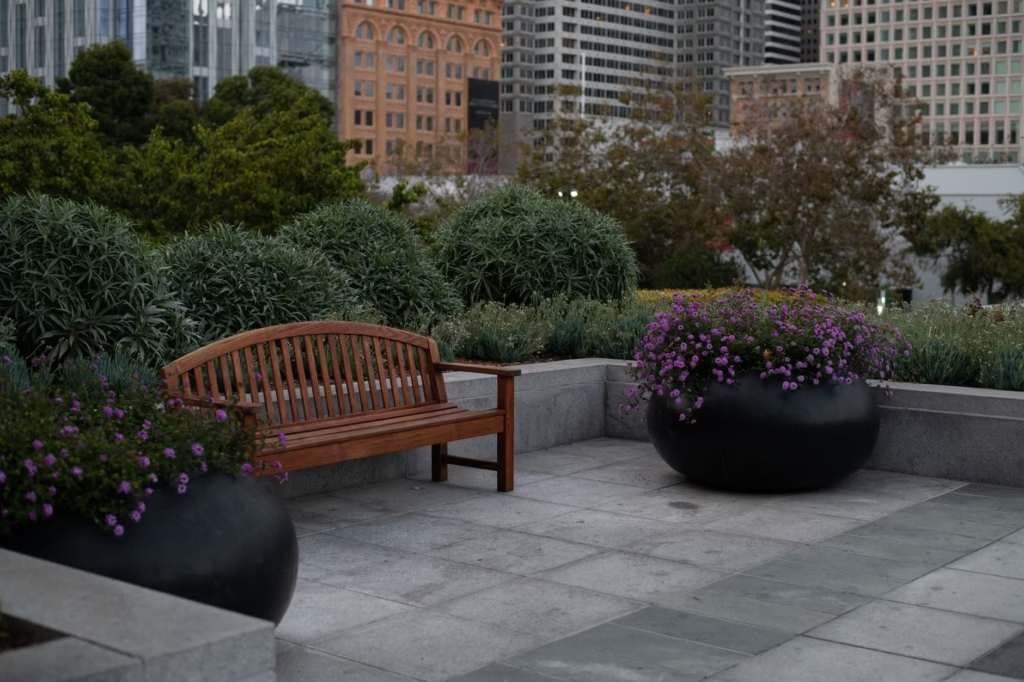
- Choose one large anchor planter for each major zone rather than scattering small ones everywhere.
- Repeat one or two container finishes, such as matte black, terracotta, or weathered gray, to reduce visual noise.
- Mix plant shapes, not random species counts: something upright, something fuller, and something that spills or softens the edge.
- Keep plants with similar light and watering needs together so maintenance stays realistic after the makeover weekend ends.
The best weekend paint projects are selective, not ambitious
Paint can absolutely transform a patio, but only when it is used surgically. A metal bistro set, a tired side table, plain planter boxes, or a dated bench can often be refreshed in a weekend because the parts are small enough to clean, prep, coat, and let cure properly. Large surfaces are different. Painting a big cracked slab, stripping and refinishing a full wood deck, or trying to revive multiple weathered pieces at once often turns a fast makeover into a stalled project surrounded by drop cloths.
- Skipping prep. Dirt, chalking, rust, and peeling finish telegraph through a rushed topcoat.
- Ignoring cure time. A surface may feel dry before it is ready for furniture, foot traffic, or rain exposure.
- Using decor to hide a poor layout. More accessories do not fix circulation problems.
- Choosing pieces that are too small for the space. Underscaled rugs, lanterns, and planters often make the patio feel pieced together.
- Forgetting the climate. Cushions, rugs, and screens that work on a covered patio can fail quickly on a fully exposed one.
If the forecast looks unstable, pivot toward modular changes instead of finish-dependent ones. Clean, rearrange, add planters, swap cushions, install rechargeable lighting, and bring in an outdoor rug. Those projects still create a visible before-and-after without depending on perfect drying weather.
Know when a makeover is trying to hide a repair problem
A patio makeover should not be used to decorate around a safety issue. Pooling water, heaving pavers, significant settling, soft wood, loose fasteners, and unstable railings are signals to slow down. CPSC’s outdoor-repairs guidance advises checking decks for loose hardware, rotting boards, and eroding foundations, and it recommends professional inspection to confirm structural soundness. Even if the project is mainly decorative, a visible movement problem or trip hazard should move the weekend plan from styling to repair. (cpsc.gov)
If the refresh includes a grill station, keep it genuinely outdoors. CPSC advises using grills outside only in well-ventilated areas and not in enclosed or attached areas, or under surfaces that can burn, because of fire and carbon-monoxide risks. (cpsc.gov)
This is the least glamorous advice in the article, but it is the one that saves the most frustration. If the patio needs structural help, the smartest weekend makeover may simply be cleaning the area, removing hazards, and making a plan for proper repair before spending money on decorative upgrades that will have to be moved again.
A realistic one-weekend patio reset
- Friday evening: empty the patio, sweep, and make a keep-move-donate pile for every loose item.
- Saturday morning: deep clean the surface and inspect for cracks, wobble, rot, drainage issues, or unsafe hardware.
- Saturday afternoon: place the main furniture for one clear purpose and mark the best positions before adding accessories.
- Saturday late afternoon: add the floor anchor, usually a rug, deck tiles, or a simplified planter border.
- Sunday morning: install one vertical or shade element if needed, then add grouped containers.
- Sunday afternoon: finish with lighting, cushions, and the smallest decor items last, not first.
- Sunday evening: test the patio the way it will actually be used, including after dark, and remove anything that still feels unnecessary.
That schedule is intentionally restrained. It leaves room for cleanup, repositioning, and small course corrections, which is what real weekend projects need. A patio makeover feels polished not when it includes the most pieces, but when every piece seems to know why it is there.
The strongest weekend makeovers look edited, not busy
The real promise of a one-weekend patio makeover is not perfection. It is momentum. A cleaner surface, a better layout, one strong vertical gesture, useful lighting, and a few comfort layers can change the entire feel of the space without turning the weekend into a renovation marathon. Start with the biggest weakness, fix it in the right order, and stop before the patio gets crowded. If the space feels easier to use, more comfortable to sit in, and more inviting at dusk than it did on Friday, the makeover worked.
FAQ
Can a rental patio still get a meaningful weekend makeover?
Yes, and rentals are often where fast upgrades make the most sense. Focus on movable layers: an outdoor rug, grouped planters, a better furniture arrangement, lanterns, rechargeable lamps, and freestanding privacy screens. Avoid anything that depends on drilling into masonry, modifying railings, or adding permanent overhead support unless the property owner has approved it.
What is the cheapest change that usually has the biggest visual effect?
A thorough clean plus a layout reset is usually the highest-value change. After that, a correctly sized outdoor rug or a pair of large planters often has more impact than several smaller decorative purchases. Cheap accessories scattered around the edges rarely help as much as one strong anchoring move.
Is painting old concrete a good one-weekend patio project?
Sometimes, but only when the slab is in decent condition and the finish system matches the surface and exposure. If the concrete is cracked, flaking, or prone to moisture issues, paint can turn a cosmetic problem into a maintenance project. For many patios, a rug, modular tiles, or a painted furniture refresh delivers a cleaner weekend result with less risk.
How do I keep the patio from looking cluttered after adding decor?
Work in larger, fewer moves. Use one rug instead of several floor accents. Group planters instead of spacing them evenly everywhere. Limit the number of finishes and colors. Add accessories last, then remove at least one item from every zone before deciding the patio is done. Outdoor spaces usually look more finished when they are edited more aggressively than indoor rooms.
What if the patio gets intense afternoon sun?
Treat shade as a function problem first and a style problem second. Move seating to the most usable zone, add a secure umbrella or other appropriate shade solution, choose heat-tolerant materials, and avoid dark cushions or surfaces that become uncomfortable. In very exposed locations, it can make sense to prioritize an evening-use layout rather than forcing the patio to perform at its worst time of day.
References
- US EPA: Renovation, Repair and Painting (RRP) Program for Consumers - https://www.epa.gov/lead/renovation-repair-and-painting-rrp-program-consumers
- US EPA: Renovation, Repair and Painting Program for Contractors - https://www.epa.gov/lead/renovation-repair-and-painting-program-contractors
- US Consumer Product Safety Commission: Extension Cords FAQ - https://www.cpsc.gov/FAQ/Extension-Cords?language=en
- US Consumer Product Safety Commission: Summer Grilling Safety - https://www.cpsc.gov/s3fs-public/NSN11052023SummerGrillingSafety_v2.pdf?VersionId=9RRDZynewNpNUd0DLBxAimQiqTMxHddt
- Illinois Extension: Container Drainage Options - https://extension.illinois.edu/container-gardens/container-drainage-options
- US Consumer Product Safety Commission: Home Safe Outdoor Repairs Checklist - https://www.cpsc.gov/s3fs-public/Home_Safe_Outdoor-Repairs_checklist_COVID19_FINAL.pdf?l_XcOex_mVLSti3HTOE0dW3IG4ibyjra=