
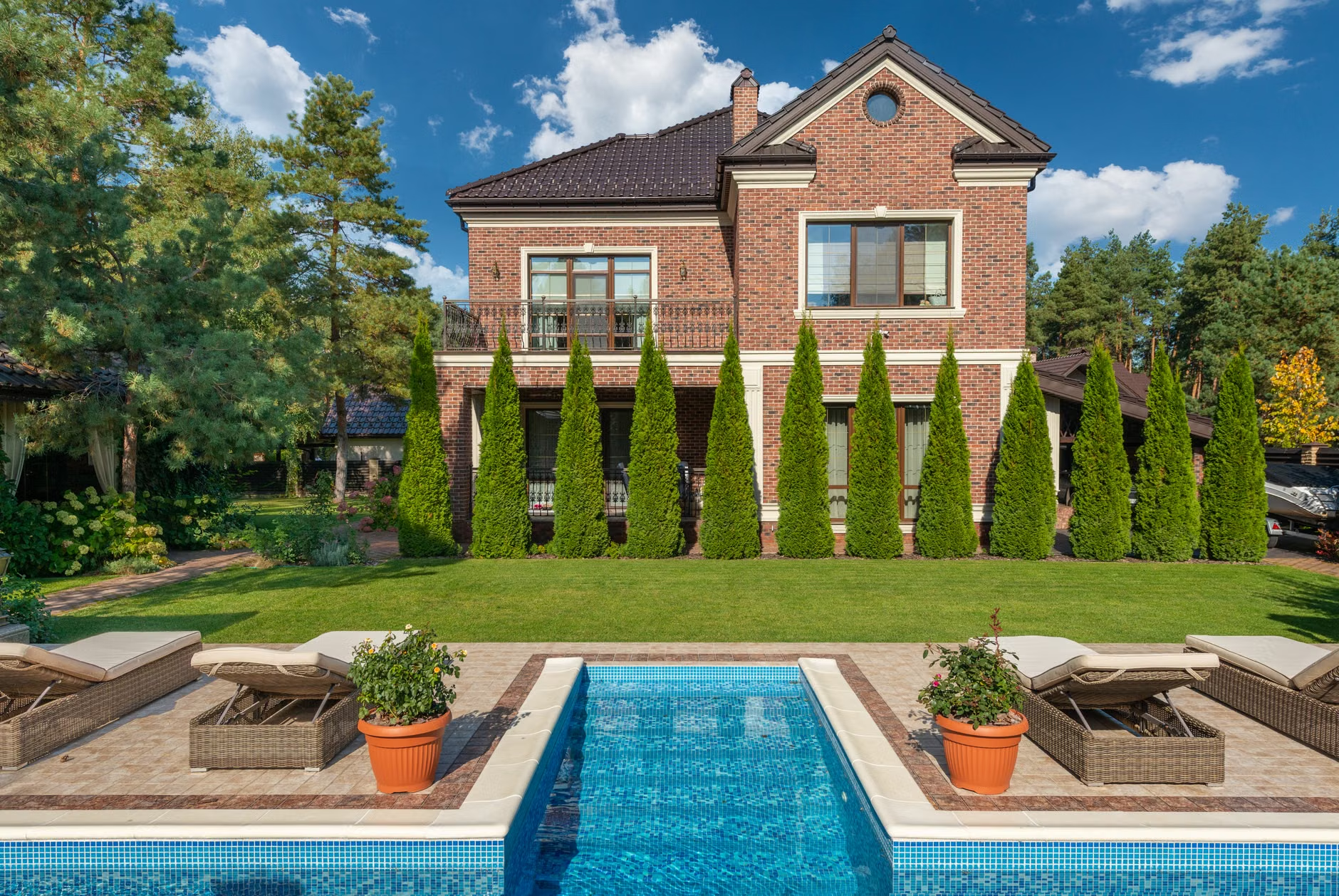
A backyard adds value when it makes the property feel finished, useful, and manageable. In the National Association of REALTORS’ 2023 Outdoor Features report, curb appeal ranked as important to attracting buyers, while Virginia Tech’s review of landscaping research found that design sophistication and plant size matter more to perceived value than simply adding more plant varieties. That is a practical starting point: buyers usually respond less to random upgrades than to a yard that looks intentional and easy to live with. (nar.realtor)
That does not mean every backyard project is a smart value play. The same NAR report shows that routine lawn care, landscape maintenance, patios, decks, tree care, and overall landscape upgrades tend to recover more than highly customized amenities such as pools, fire features, or elaborate lighting systems. In practice, resale value usually rises when landscaping improves function, maintenance fit, and first impressions at the same time. (nar.realtor)
Start with the Backyard Value Filter, not a shopping list
Before choosing pavers, trees, or patio furniture, run each idea through a simple Backyard Value Filter. A project deserves priority when it fixes a visible problem, creates a clearly usable space, stays attractive with ordinary upkeep, and would still make sense to a wide range of future buyers. That matches what the NAR and Virginia Tech sources imply: broad appeal comes from coherence and livability, not novelty for its own sake. (nar.realtor)
- Fix what buyers notice in 30 seconds, such as standing water, bare slopes, patchy turf, dead shrubs, or a backyard with no obvious place to sit.
- Add one understandable use zone. A dining patio, lounge corner, play lawn, or garden path usually works better than several unfinished mini-projects.
- Prefer durable simplicity over fragile drama. Fewer materials and climate-suited plants tend to age better than trend-driven features that need constant upkeep.
- Ask what the yard will look like in midsummer and in winter. Value comes from year-round order, not one perfect weekend in bloom.
Which backyard projects tend to have the broadest resale appeal
NAR’s 2023 report used representative project descriptions and estimated cost recovery for standard-scope outdoor projects. These numbers are not promises, and local market conditions, climate, lot size, and workmanship still matter. But they are helpful for spotting which categories tend to translate most reliably into resale appeal. (nar.realtor)
| Project | Estimated cost recovery | Editorial takeaway |
|---|---|---|
| Standard lawn care service | 217% (nar.realtor) | Basic upkeep can matter more than owners expect because it improves first impressions cheaply. |
| Landscape maintenance | 104% (nar.realtor) | A cared-for yard signals lower future work and fewer deferred problems. |
| Overall landscape upgrade | 100% (nar.realtor) | A coherent mix of hardscape, planting, and a tree can translate well to resale. |
| New patio | 95% (nar.realtor) | Defined outdoor living space has broad appeal when the scale fits the lot. |
| New wood deck | 89% (nar.realtor) | A strong option where grade or house height makes a patio less practical. |
| Tree care | 87% (nar.realtor) | Healthy, managed trees support both appearance and risk reduction. |
| Irrigation system installation | 83% (nar.realtor) | Useful when it keeps the landscape healthy without obvious waste. |
| Landscape lighting | 59% (nar.realtor) | A finishing touch, not usually the main value driver. |
| In-ground pool addition | 56% (nar.realtor) | Enjoyment can be high, but resale payoff is much more situational. |
The pattern matters more than any single number. Value-friendly backyard work is often the kind that makes a home feel cared for and straightforward to own: maintenance, clear hardscape, tree care, and a sensible overall upgrade. High-enjoyment features can still be worth doing for personal use, but the broader the buyer pool, the more conservative and adaptable the project should be. (nar.realtor)
1. Fix water, grade, and circulation problems before buying plants
If water sits in the yard, washes mulch downhill, pools by the back door, or leaves muddy tracks every time it rains, decorative upgrades should wait. EPA guidance on landscaping and rain gardens emphasizes matching solutions to site conditions, improving infiltration, and using features such as rain gardens or permeable areas to slow runoff where appropriate. The resale logic is simple: buyers forgive a plain yard more easily than a yard that hints at drainage trouble or ongoing maintenance headaches. (epa.gov)

Drainage work is not glamorous, but it protects every visible improvement that comes after it. The Department of Energy’s consumer landscaping guide also warns against letting moisture linger near the house and against dense foliage crowding exterior walls, where moisture, roots, or pests can become problems. A backyard that drains well and moves people comfortably is a much better platform for value-adding design. (energy.gov)
Rain gardens can be attractive and useful, but they are not a cure-all for major grading or foundation problems. EPA notes that siting matters and that underground utilities should be verified before digging. (epa.gov)
2. Create one outdoor room buyers can understand in ten seconds
A defined surface for dining, lounging, or grilling often does more for perceived value than several scattered features. NAR estimated cost recovery at 95 percent for a new patio and 89 percent for a new wood deck in its representative 2023 projects, which helps explain why these upgrades remain popular: they turn backyard square footage into space buyers immediately understand. (nar.realtor)
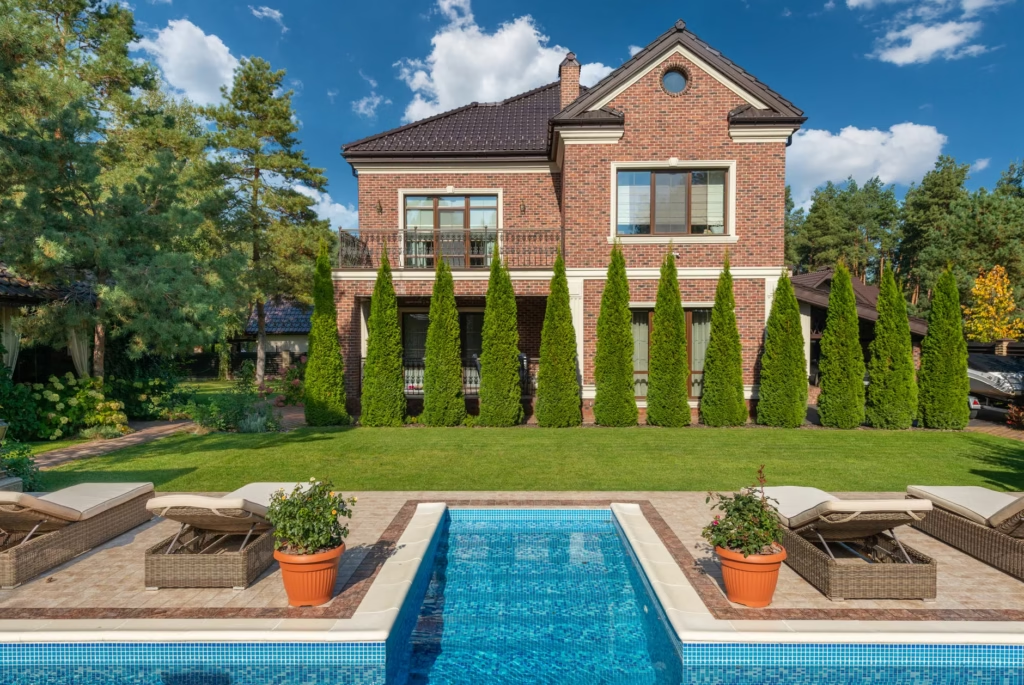
The strongest version is usually modest and well placed. A patio or deck should connect naturally to the house, allow comfortable circulation around furniture, and leave enough planting or lawn so the yard still breathes. Patios often make sense on flat lots and can feel especially permanent. Decks are often the better answer on steep grades or where the main floor sits well above the yard. The project should fit the site, not fight it.
3. Invest in design coherence, not just more plants
Planting design affects value more than many owners realize. Virginia Tech’s review of research on perceived home value found that design sophistication ranked ahead of plant-type diversity, and larger plant size also mattered more than simply adding more kinds of plants. In practical terms, a backyard feels more valuable when beds have a deliberate shape, plants are scaled to the house, and the composition looks mature enough to belong there. (pubs.ext.vt.edu)
That is why a restrained palette usually works better than impulse buying at the garden center. Repeating a few shrubs, ornamental grasses, or perennials can make a yard look designed rather than collected. EPA also notes that healthy soil, mulch, and plants matched to local sun, wind, and moisture conditions improve water retention and reduce runoff, while regionally appropriate or native plants can reduce ongoing maintenance once established. (epa.gov)
4. Use trees and privacy planting where they solve heat, exposure, or overlook
Trees earn their keep when they solve a comfort problem, not just when they fill an empty corner. The Department of Energy says shade from trees, vines, and shrubs can reduce summer heat gain, and its consumer landscaping guide gives specific placement guidance for deciduous trees on south and west exposures. Federal tree research also shows that urban trees can reduce residential energy use overall. A shaded patio, cooler west-facing wall, or softer edge to a fence line can make the whole backyard feel more livable. (energy.gov)
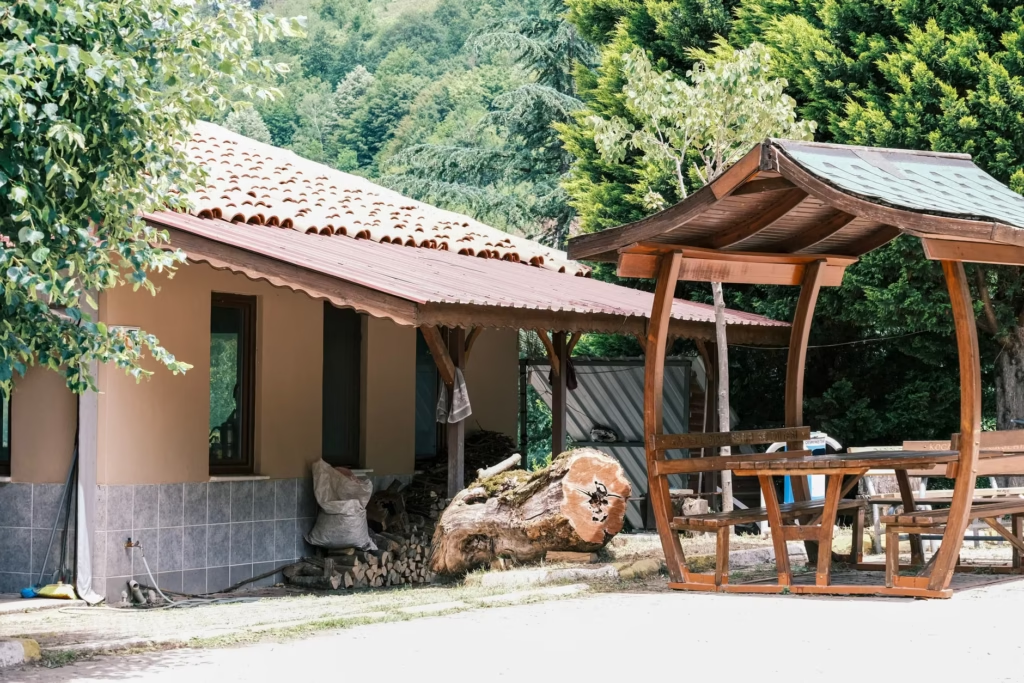
But tree value depends on placement. DOE advises planting far enough from the house to avoid future roof, gutter, root, and moisture conflicts, and Arbor Day’s right tree, right place guidance similarly stresses mature size, utilities, and structure clearance. The best value trees are the ones that still look smart 15 years later, not the ones that outgrow the space in five. (energy.gov)
Privacy planting follows the same rule. A layered screen of canopy tree, smaller understory, shrubs, and sometimes a fence usually looks more natural and ages better than a single fast-growing hedge that must be sheared constantly. Match the screen to the problem you are solving, whether that is a second-story view, a close rear lot line, or hot afternoon exposure, and choose plants whose mature size fits the space. (arborday.org)
5. Add lighting and irrigation as supporting systems, not centerpieces
Lighting is most valuable when it supports movement and atmosphere rather than trying to become the attraction. In NAR’s 2023 report, landscape lighting earned a perfect Joy Score but a more modest 59 percent cost recovery, which suggests a useful lesson: buyers like the effect, but the financial upside can flatten if the system becomes elaborate or overbuilt. Prioritize steps, path edges, gate latches, seating zones, and the view back to the house. (nar.realtor)
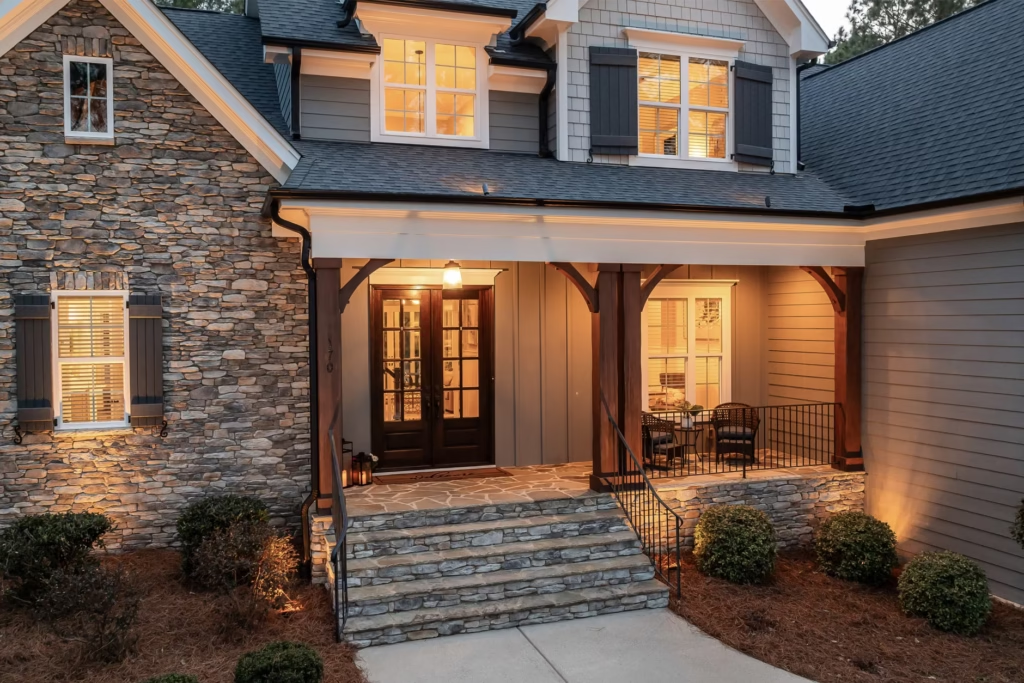
Irrigation matters most in yards that would otherwise look expensive to maintain. EPA notes that turfgrass often receives the largest share of irrigation water in traditional landscapes, and WaterSense-labeled controllers use weather or soil-moisture data to water more intelligently than clock-based timers. In a value-focused backyard, that usually means shrinking lawn to places with a real use, grouping plants by water need, and reserving drip or targeted irrigation for beds instead of blanket watering everything. (epa.gov)
What owners often overestimate
- Resort-style add-ons. Outdoor kitchens, pools, and fire features can be wonderful for owners, but NAR’s representative recoveries were lower than basic landscape improvement, and REALTORS recommended them far less often before sale. (nar.realtor)
- Wall-to-wall lawn. EPA says turfgrass typically takes the highest share of irrigation water in traditional landscaping, so big lawn areas only help value when they serve a real function such as play space or pet space. (epa.gov)
- High-maintenance plant collections. A yard that depends on constant clipping, heavy watering, or seasonal replanting can read as a future chore list. Regionally appropriate plants and hydrozoning usually create a better maintenance story. (epa.gov)
- Mini-projects with no master plan. Buyers notice when materials, bed lines, and uses do not connect. Design coherence is part of the value, not decoration added at the end. (pubs.ext.vt.edu)
A practical sequence for upgrading a real backyard
- Walk the yard after a hard rain and again on a dry weekend. Note ponding, erosion, muddy shortcuts, harsh afternoon sun, awkward door swings, and spots nobody uses. EPA’s landscaping and rain-garden guidance is useful for spotting runoff issues and matching them to the site. (epa.gov)
- Pick one primary backyard function first, such as dining, lounging, play, gardening, or shade. Value rises when the main use is obvious.
- Spend on invisible corrections before finishes. Regrading, drainage changes, irrigation repair, and overdue tree work protect later spending and often support resale better than flashy extras. (nar.realtor)
- Create one main surface and one clear path. A modest patio, deck, or walk that connects the house to the yard usually beats several disconnected features. (nar.realtor)
- Simplify planting. Use fewer species, larger groupings, mulch, and locally adapted plants grouped by water need. (pubs.ext.vt.edu)
- Before digging for trees, irrigation, patios, or fencing, contact 811 or your state’s one-call system so buried utilities can be marked. (training.commongroundalliance.com)
Consider a hypothetical owner with a tired backyard and a moderate budget. If the yard has a cracked pad, a soggy low spot, overgrown shrubs, and no real seating area, the stronger value play is usually to fix drainage, build or enlarge one simple patio, prune or replace problem shrubs, add mulch and a few well-placed plants, and install basic lighting. Spending the same money on a built-in kitchen or decorative fire feature may create more personal enjoyment, but NAR’s project comparisons suggest the broader market often rewards the simpler package more consistently. (nar.realtor)
Mistakes that can cancel out otherwise good landscaping
- Planting for current nursery size instead of mature size, then creating future roof, gutter, root, or utility conflicts. (energy.gov)
- Letting planting beds touch the house everywhere. Moisture and pest risks increase when dense foliage crowds exterior walls. (energy.gov)
- Choosing too many surface materials. Three small patios in different pavers can make a yard feel pieced together.
- Installing irrigation or hardscape without a maintenance plan. Buyers like features they can understand and keep up.
- Digging first and locating utilities later. Trees, fences, decks, and irrigation lines are all projects that deserve an 811 call. (training.commongroundalliance.com)
The best backyard value strategy is usually the least flashy one
The backyard ideas most likely to increase home value are not necessarily the fanciest ones. The most reliable moves are the ones that make the space dry, usable, shaded, coherent, and realistic to maintain. If the next project solves a visible problem and makes the yard easier to enjoy for the average buyer, it is probably moving in the right direction. (nar.realtor)
Frequently asked questions
Does a pool increase home value?
Sometimes, but it is highly market-specific. In NAR’s 2023 Outdoor Features report, the representative in-ground pool addition showed 56 percent cost recovery, and only a very small share of REALTORS said they would recommend it before selling. That does not make pools bad projects. It means they are usually lifestyle decisions first and resale decisions second. (nar.realtor)
Are native plants good for resale?
Usually, yes, if the design looks intentional. EPA says regionally appropriate and native plants can need less supplemental water once established and can be better adapted to local conditions, but Virginia Tech’s research summary also makes an important point: value comes from design quality and plant scale, not from plant labels alone. A native garden still needs structure. (epa.gov)
Should a seller replace the entire backyard before listing?
Usually not. Basic maintenance, tree care, patio or deck improvement, and a coherent landscape refresh often have broader resale appeal than a full custom makeover. Fix obvious problems first, then make the space readable and tidy. (nar.realtor)
How much lawn should a backyard have?
Enough for real use, not just habit. EPA notes that turfgrass often gets the largest share of irrigation water in traditional landscapes, so oversized lawn is not automatically a value booster. A smaller, healthier lawn plus planting beds, shade, or a patio is often a better balance. (epa.gov)
Is professional landscape design worth it?
For a simple refresh, not always. For significant grade changes, drainage work, retaining walls, or a full backyard rethink, design help can be worthwhile. Virginia Tech’s review of perceived-value research found that design sophistication mattered greatly, which supports the idea that a coherent plan can add more value than buying better materials without a plan. (pubs.ext.vt.edu)
References
- National Association of REALTORS: 2023 Remodeling Impact Report, Outdoor Features - https://www.nar.realtor/sites/default/files/documents/2023-03-remodeling-impact-outdoor-features-03-17-2023.pdf
- Virginia Cooperative Extension: The Effect of Landscape Plants on Perceived Home Value - https://www.pubs.ext.vt.edu/content/pubs_ext_vt_edu/en/426/426-087/426-087.html
- U.S. EPA WaterSense: Landscaping Tips - https://www.epa.gov/watersense/landscaping-tips
- U.S. EPA WaterSense: WaterSense Labeled Controllers - https://www.epa.gov/watersense/watersense-labeled-controllers
- U.S. EPA: Soak Up the Rain, Rain Gardens - https://www.epa.gov/soakuptherain/soak-rain-rain-gardens
- U.S. Department of Energy: Consumer Guide to Home Landscaping - https://www.energy.gov/sites/default/files/2021-08/ES-Landscaping_081721.pdf
- U.S. Forest Service: Residential building energy conservation and avoided power plant emissions by urban and community t - https://research.fs.usda.gov/treesearch/53420
- Arbor Day Foundation: Planting the Right Tree in the Right Place - https://www.arborday.org/perspectives/planting-right-tree-right-place
- Common Ground Alliance: Excavator Damage Prevention Education and 811 information - https://training.commongroundalliance.com/