

Standing water is rarely just a puddle problem. In most backyards, it shows up because too much water is being concentrated in one place, the soil cannot absorb it fast enough, or the yard has been shaped in a way that sends runoff exactly where it should not go. Roof runoff, compacted lawn, patios and walkways, and shallow low spots often work together to create the mess. (epa.gov)
That matters for more than appearance. Water that lingers can keep roots short of oxygen, weaken turf, create mud and slippery surfaces, hold moisture near foundations, and provide mosquito habitat if it remains in place. The best fix depends on the kind of water involved: roof runoff, sheet flow from a slope, shallow groundwater seepage, or a soil structure problem. (cdc.gov)

TL;DR
- Start by tracing where water comes from during a storm. EPA homeowner guidance explicitly recommends watching where rain goes before choosing a fix. (epa.gov)
- Fix the cheap routing problems first: grading near the house, downspout discharge, and runoff from hard surfaces usually matter more than decorative add-ons. (bsesc.energy.gov)
- Use infiltration features only where the soil can drain them. Extension guidance for rain gardens commonly uses a 24- to 48-hour drawdown test as a basic screen. (extension.psu.edu)
- French drains and dry wells solve different problems. French drains intercept moving water; dry wells store concentrated runoff so it can infiltrate below grade. (extension.okstate.edu)
- If the wet area is tied to a high water table, foundation moisture, septic setbacks, or buried utilities, the project moves out of simple DIY territory. (bsesc.energy.gov)
Start with a water path audit
Before buying pipe, gravel, or plants, do a simple water path audit. The goal is to identify four things in order: the source, the path, the low point, and the exit. That sequence matters because a wet spot is often only the last visible symptom of a problem that begins uphill or on the roof. EPA homeowner stormwater guidance starts the same way: walk the yard during rain and watch where the water actually goes. (epa.gov)
- Identify the source. Is the water coming from a downspout, a patio, a neighbor’s higher grade, overwatering, or a seep from the slope? Roof runoff and impervious surfaces are common sources of concentrated flow. (extension.umd.edu)
- Trace the path. Look for sheet flow across turf, a worn channel in mulch, splash marks at a downspout, sediment fans, or a soggy strip beside a fence or foundation. These clues show how water is moving before it pools. (epa.gov)
- Test whether the soil can absorb water. Extension rain garden guidance commonly suggests a simple percolation test; if water still sits in a test hole after roughly 24 to 48 hours, infiltration-only solutions are a poor match for that spot. (extension.psu.edu)
- Check the house edge first. Building guidance commonly calls for finished grade to slope away from the house, often around 0.5 inch per foot for 10 feet where site conditions allow, and roof water should be carried well away from the foundation. (bsesc.energy.gov)
- Flag constraints before digging. Rain gardens, buried drains, and dry wells may need setbacks from foundations, septic areas, wells, slopes, or utilities, and local stormwater rules can affect what is allowed. (extension.umn.edu)
| What you see | What it usually means | Solutions most likely to work |
|---|---|---|
| A puddle directly below one downspout | Roof runoff is being dumped in one concentrated spot. (extension.umd.edu) | Downspout extension, rain barrel with overflow, rain garden, or dry well. (extension.okstate.edu) |
| Wet soil along the foundation | Negative grade, roof discharge too close to the house, or both. (bsesc.energy.gov) | Regrading, correcting downspouts, or adding a swale or drain where setbacks are tight. (bsesc.energy.gov) |
| A broad soggy patch in flat lawn after moderate rain | Low infiltration from compaction, fine-textured soil, or a shallow low spot. (nrcs.usda.gov) | Soil improvement, rain garden in the right location, shallow swale, or a French drain if water is also moving below the surface. (extension.umn.edu) |
| Water sheets off a patio or driveway into the yard | Impervious surfaces are accelerating runoff. (mass.gov) | Permeable paving, redirecting runoff to vegetated areas, a swale, or an infiltration trench. (epa.gov) |
| A muddy strip at the base of a slope | Shallow subsurface water or runoff from uphill ground is being intercepted at the surface. (extension.okstate.edu) | Curtain drain or French drain, swale, or a planted wet-tolerant zone if the condition is seasonal and persistent. (extension.okstate.edu) |
10 backyard drainage solutions, from quick fixes to structural changes
1. Regrade the soil so the first few feet actually shed water
If standing water shows up near the house, this is the first place to look. Building guidance commonly calls for finished grade to slope away from the home, often around 6 inches over the first 10 feet where the site allows. If there is not enough room to achieve that slope, swales or drains may be needed to move the water away. The important practical point is that this should be a stable soil slope, not a cosmetic buildup of mulch that settles after one season. (bsesc.energy.gov)
2. Extend or redirect downspouts before touching the lawn
A surprising number of backyard drainage problems start with roof water. Extension and EPA guidance both treat downspout redirection as a foundational fix because it turns a concentrated discharge into something the landscape can absorb or route more safely. The discharge area should stay within your property, away from the foundation, and away from septic components and neighboring lots. This is one of the highest-value fixes because it addresses the source instead of trying to rescue the puddle after it forms. (extension.okstate.edu)
3. Add a rain barrel when the real issue is bursty roof runoff
A rain barrel will not cure a badly graded yard, but it can reduce the immediate surge from a downspout and make a small wet area much easier to manage. EPA includes rain barrels among basic homeowner runoff controls, and University of Minnesota guidance notes that barrels should have a screen and an overflow directed away from buildings. The limitation is important: once the barrel fills, the overflow becomes the drainage plan. Stored water should also be treated as nonpotable, and the barrel needs to stay covered so it does not become mosquito habitat. (epa.gov)
4. Cut a shallow swale to intercept and slow sheet flow
A swale is a broad, shallow channel that guides water while slowing it down enough to soak in along the way. EPA describes bioswales and grassed swales as vegetated channels that slow, filter, and treat stormwater, and extension guidance notes that features like check dams or stone at the inlet can reduce erosive speed during larger storms. Swales work especially well when water moves across the yard as a sheet rather than popping up from below. The common mistake is making them too narrow and ditch-like, which speeds flow instead of calming it. (epa.gov)
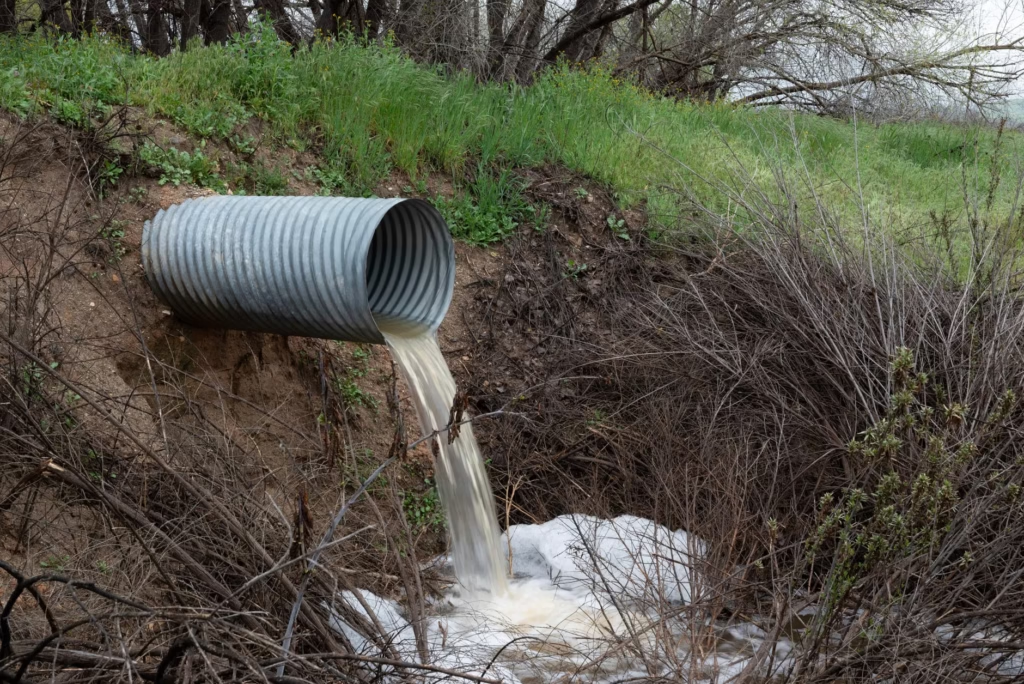
5. Build a rain garden where runoff naturally wants to collect
A rain garden is one of the best-looking solutions when the problem is repeated surface runoff from roofs, driveways, or compacted lawn. It is not just a flower bed in a low spot; it is a shallow planted basin sized and located to temporarily hold runoff and let it infiltrate. Extension guidance commonly recommends testing the soil first, keeping the feature at least 10 feet from the house, and avoiding sites that fail to drain within about 24 to 48 hours. That last point is the deal-breaker: if the site is already chronically waterlogged from groundwater, a rain garden alone is the wrong tool. (extension.psu.edu)
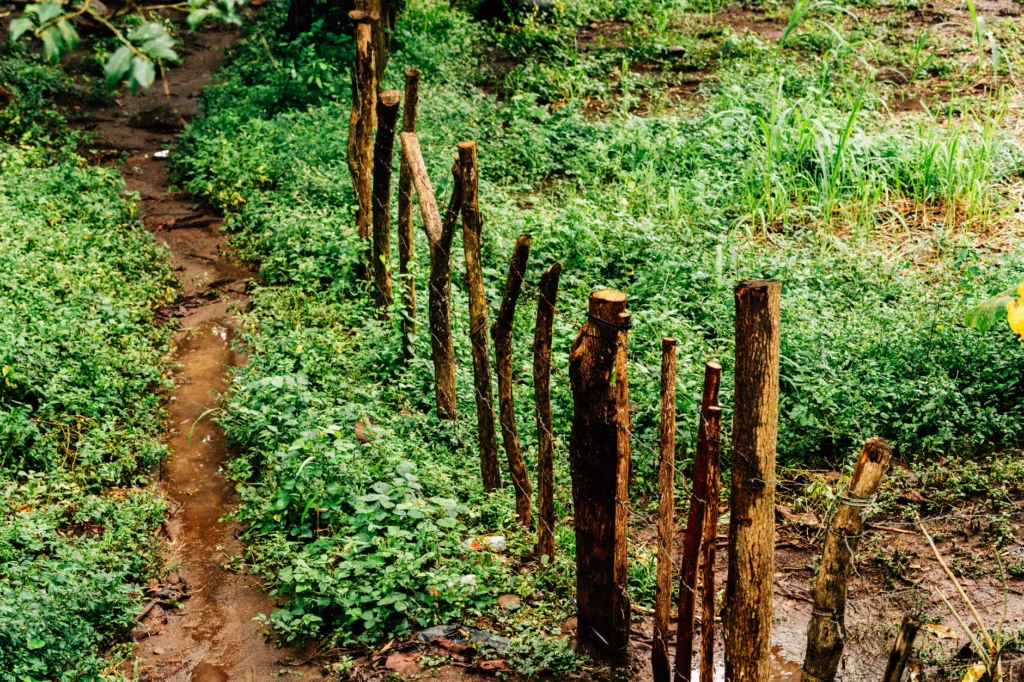
6. Install a French drain or curtain drain for persistent seepage
When the yard stays soggy because water is moving through the soil and surfacing downslope, a French drain often makes more sense than surface reshaping alone. Oklahoma State describes these as gravel-based subsurface drainage systems, often with perforated pipe, used to remove excess water from saturated soil conditions. The key design question is the outlet. A French drain without a reliable place for the water to go is only a buried collection point. It also needs maintenance access because soil and fines can gradually clog the system. (extension.okstate.edu)
7. Use a dry well or infiltration trench where runoff is concentrated
A dry well is useful when water arrives in one concentrated place, such as a downspout outlet or a small hardscape drain, and there is no convenient downhill daylight outlet. Massachusetts homeowner guidance describes dry wells as a way to receive concentrated runoff and infiltrate it below grade, while Oklahoma State notes that a dry well can serve as an outlet alternative where the site is too flat for gravity flow. This solution depends heavily on soil and groundwater conditions. If the area already fails a percolation test or sits over shallow groundwater, a dry well can stay wet and underperform. (mass.gov)
8. Replace or break up hard surfaces with permeable materials
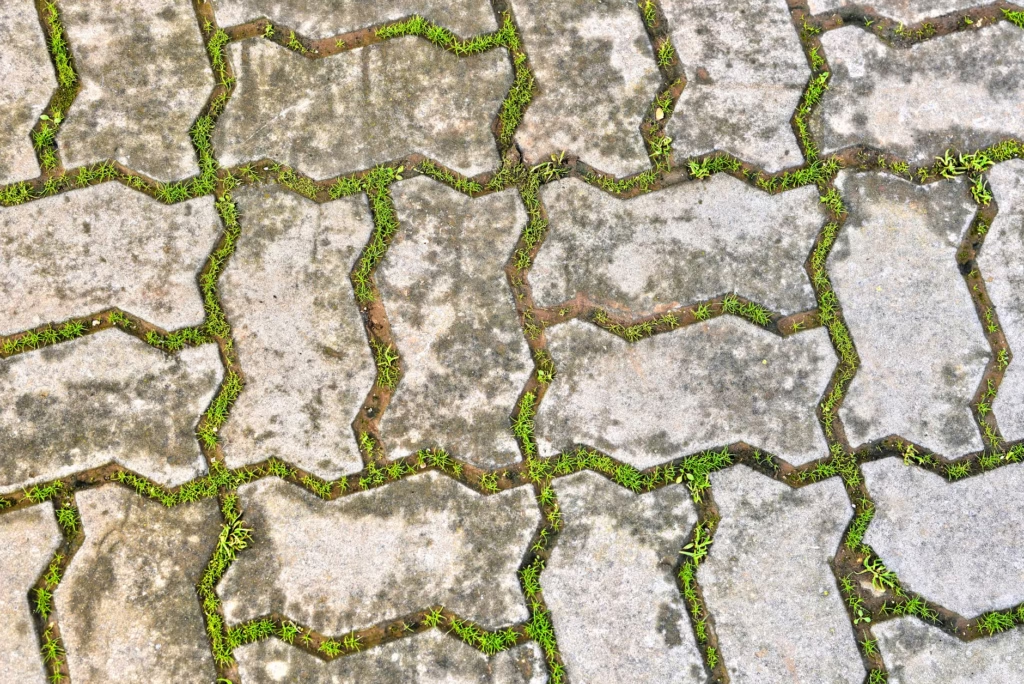
If water consistently races off a patio, shed apron, or walkway, the surface itself may be the problem. EPA and state homeowner guidance both recommend reducing impervious cover or switching to materials that allow water to pass through, such as permeable pavers, porous concrete, porous asphalt, gravel, or other pervious options suited to the site. One overlooked detail: some materials that look loose, such as dense-grade aggregate or stone dust, are designed to compact tightly and can behave more like an impervious surface over time. (epa.gov)
9. Rebuild soil infiltration instead of treating the lawn like pavement
Compaction squeezes pore space out of soil, which slows water movement and encourages runoff and ponding. USDA NRCS notes that compaction, surface crusting, and low organic matter all reduce infiltration, while extension guidance recommends keeping traffic off wet soil and improving structure with tillage and organic matter where appropriate. The nuance matters here. Core aeration can help relieve compaction in turf and improve root-zone conditions over time, but NC State also notes that it is not a direct cure for severely restricted drainage on its own. If the yard is shaped badly or the subsoil stays saturated, aeration is only part of the answer. (nrcs.usda.gov)
10. Redesign the wettest zone with plants or raised beds when drainage cannot be fully changed
Sometimes the right answer is not forcing every square foot of the yard to stay equally dry. If a low area remains seasonally wet because of soil type or a shallow water table, it may be more practical to reserve that space for water-tolerant planting and move sensitive uses elsewhere. Extension guidance from Utah State recommends raised beds or berms for poorly drained ground, noting that beds 8 to 12 inches high are adequate for many garden plants and larger berms work better for woody plants. Clemson also notes that some areas are better replanted with water-tolerant species if regrading or drain tile is not the best fit. (extension.usu.edu)
The best results often come from combining two or three modest fixes. For example, redirecting one downspout, cutting a shallow swale, and relieving compaction in the receiving area can outperform a single bigger intervention installed in the wrong place. (epa.gov)
A realistic example of how the fixes work together
Consider a hypothetical backyard where water pools behind the patio after every strong rain. The audit shows two causes: one downspout empties beside the slab, and the lawn beyond it is compacted from regular foot traffic. In that case, a French drain might be unnecessary. A better first pass would be to extend the downspout into a planted receiving area, cut a shallow swale to spread overflow, and relieve compaction in the lawn or convert that traffic corridor to a path. If a percolation test then shows the soil still drains too slowly, the next step could be a rain garden or small dry well, depending on how concentrated the remaining flow is. (extension.okstate.edu)
Common mistakes that make backyard drainage worse
- Treating every puddle as a low-spot problem. If the source is roof runoff or sheet flow from uphill ground, filling the puddle alone usually fails. (epa.gov)
- Moving water closer to the house or onto someone else’s property. Downspout guidance specifically warns against both. (extension.okstate.edu)
- Building infiltration features in soil that cannot infiltrate. Rain garden guidance commonly uses a 24- to 48-hour drawdown test for a reason. (extension.psu.edu)
- Assuming aeration will solve groundwater seepage. Aeration may help compacted turf, but it is not a substitute for an outlet or subsurface drain where water is surfacing from below. (content.ces.ncsu.edu)
- Skipping maintenance. French drains, swales, rain barrels, and permeable surfaces all lose performance if outlets clog, gravel fills with fines, or overflow paths are ignored. (extension.okstate.edu)
When it is time to call a professional
Bring in a qualified landscape contractor, drainage specialist, or engineer if water is entering a basement or crawlspace, if the project affects retaining walls or steep slopes, if a buried outlet is not obvious, or if the work approaches septic areas, wells, or utilities. It is also worth getting local guidance when municipal stormwater rules or neighbor drainage conflicts are involved. Backyard drainage is still site engineering, even on a small lot, and the costliest mistakes usually come from assuming the water will sort itself out once it is underground. (bsesc.energy.gov)
The practical order of operations is simple: trace the water, fix the source, improve the route, and only then invest in storage or infiltration features. For many yards, the winning combination is not dramatic. It is one or two downspout corrections, a bit of grading, and a receiving area that can finally absorb what reaches it. Start small, verify the result in the next storm, and scale up only if the water path says you need to. (epa.gov)
FAQ
How long should water stand in a backyard after rain?
There is no single universal number for every lawn, but water that lingers after ordinary storms deserves attention. Extension guidance for rain gardens commonly uses a 24- to 48-hour drain time as a basic benchmark because longer ponding can stress plants and increase mosquito risk. If a regular wet spot remains beyond that window, the source and soil deserve a closer look. (extension.psu.edu)
Is a French drain better than a rain garden?
They solve different problems. A rain garden is best for surface runoff that can be temporarily stored and infiltrated in suitable soil. A French drain is better when water is moving through the soil and surfacing as seepage or saturation. The right choice depends on whether the issue is overland flow, subsurface flow, or both. (extension.psu.edu)
Will core aeration fix a soggy yard?
Sometimes it helps, but it is not a universal fix. Aeration can reduce compaction in turf and improve the root zone, yet extension guidance also notes that it does not directly solve serious drainage restrictions by itself. If the real problem is grade, concentrated roof runoff, or a perched wet layer, aeration needs to be paired with a routing fix. (content.ces.ncsu.edu)
Do rain barrels attract mosquitoes?
They can if they are left open or poorly screened. CDC recommends tightly covering water storage containers, and University of Minnesota guidance notes that barrels should include a screen and overflow setup. A covered, maintained barrel is much less of a problem than an open one. (cdc.gov)
What is the first drainage fix most homeowners should try?
Usually the first move is observing a storm and correcting roof-water discharge. EPA homeowner guidance starts with watching where rain goes, and downspout redirection is one of the simplest ways to reduce concentrated runoff before moving on to bigger projects like buried drains or rebuilt hardscape. (epa.gov)
References
- U.S. EPA - What You Can Do to Soak Up the Rain - https://www.epa.gov/soakuptherain/what-you-can-do-soak-rain
- Building Science Education - Site is Excavated: Final Grade is Sloped Away from Home - https://bsesc.energy.gov/energy-basics/site-excavated-final-grade-sloped-away-home
- Building Science Education - Foundation Drain Gutters Downspouts - https://bsesc.energy.gov/energy-basics/foundation-drain-gutters-downspouts
- Oklahoma State University Extension - Minimizing Stormwater Runoff by Disconnecting Residential Downspouts - https://extension.okstate.edu/fact-sheets/minimizing-stormwater-runoff-by-disconnecting-residential-downspouts
- Oklahoma State University Extension - Addressing Drainage Issues in the Urban Landscape - https://extension.okstate.edu/fact-sheets/addressing-drainage-issues-in-the-urban-landscape
- University of Minnesota Extension - Building a Rain Garden - https://extension.umn.edu/landscape-design/rain-gardens
- Penn State Extension - How to Make a Rain Garden - https://extension.psu.edu/how-to-make-a-rain-garden
- University of Maryland Extension - Downspout Redirection - https://extension.umd.edu/resource/downspout-redirection
- U.S. EPA - Soak Up the Rain: Permeable Pavement - https://www.epa.gov/soakuptherain/soak-rain-permeable-pavement
- U.S. EPA - Types of Green Infrastructure - https://www.epa.gov/green-infrastructure/types-green-infrastructure
- USDA NRCS - Soil Health: Infiltration - https://www.nrcs.usda.gov/sites/default/files/2022-10/Soil%20Infiltration.pdf
- NC State Extension - Modifying Soil for Plant Growth around Your Home - https://content.ces.ncsu.edu/modifying-soil-for-plant-growth-around-your-home