
Skip to content

How to Make Your Backyard More Kid-Friendly and Safe

A safer kid-friendly backyard is less about adding more play equipment and more about improving sight lines, softer landings, secure barriers, and smarter separation between play and hazards.
5 minute read By Daniel Carter 0 comments

A kid-friendly backyard is not the same as a backyard full of kid stuff. The safer yard is usually the one where children can move easily, adults can see them quickly, and the highest-risk features are harder to reach. That means layout matters as much as equipment.

Before buying anything new, it helps to look at the space the way a child actually uses it: running from the back door, cutting corners, climbing whatever looks climbable, and heading straight toward water, wheels, or fire if those features are visible.

Start with a child-height safety check

One of the simplest ways to improve a backyard is to do a short walk-through at child height. Crouch down, start at the back door, and follow the route a child would naturally take. From that height, loose pavers, gaps in fencing, sharp deck corners, exposed sprinkler heads, thorny plants, and tempting climb points are much easier to spot than they are from adult eye level.

Adult kneeling at child height to inspect a backyard path for tripping hazards
A quick child-height inspection can reveal loose pavers, sharp edges, and easy escape routes adults miss. Credit: Photo by Ketut Subiyanto on Pexels. Source: Pexels.
  1. Trace the most common path from the house to the play area.
  2. Pause at gates, steps, patios, and transitions between grass, mulch, and hard surfaces.
  3. Check whether a child could reach water, tools, or the driveway before an adult notices.
  4. Look for fall zones under climbing or swinging areas, not just the equipment itself.
  5. Fix the hazards with the biggest consequences first: water access, hard landing areas, unstable equipment, fire features, and escape points.

This also keeps the project realistic. A toddler-friendly yard may need open sight lines, a shaded digging spot, and a gate that latches reliably. An older child may need more running room, clearer boundaries for ball games, and rules about where bikes, scooters, and sports gear can be left. Different ages do not need the same backyard setup.

Organize the yard so play happens away from the biggest hazards

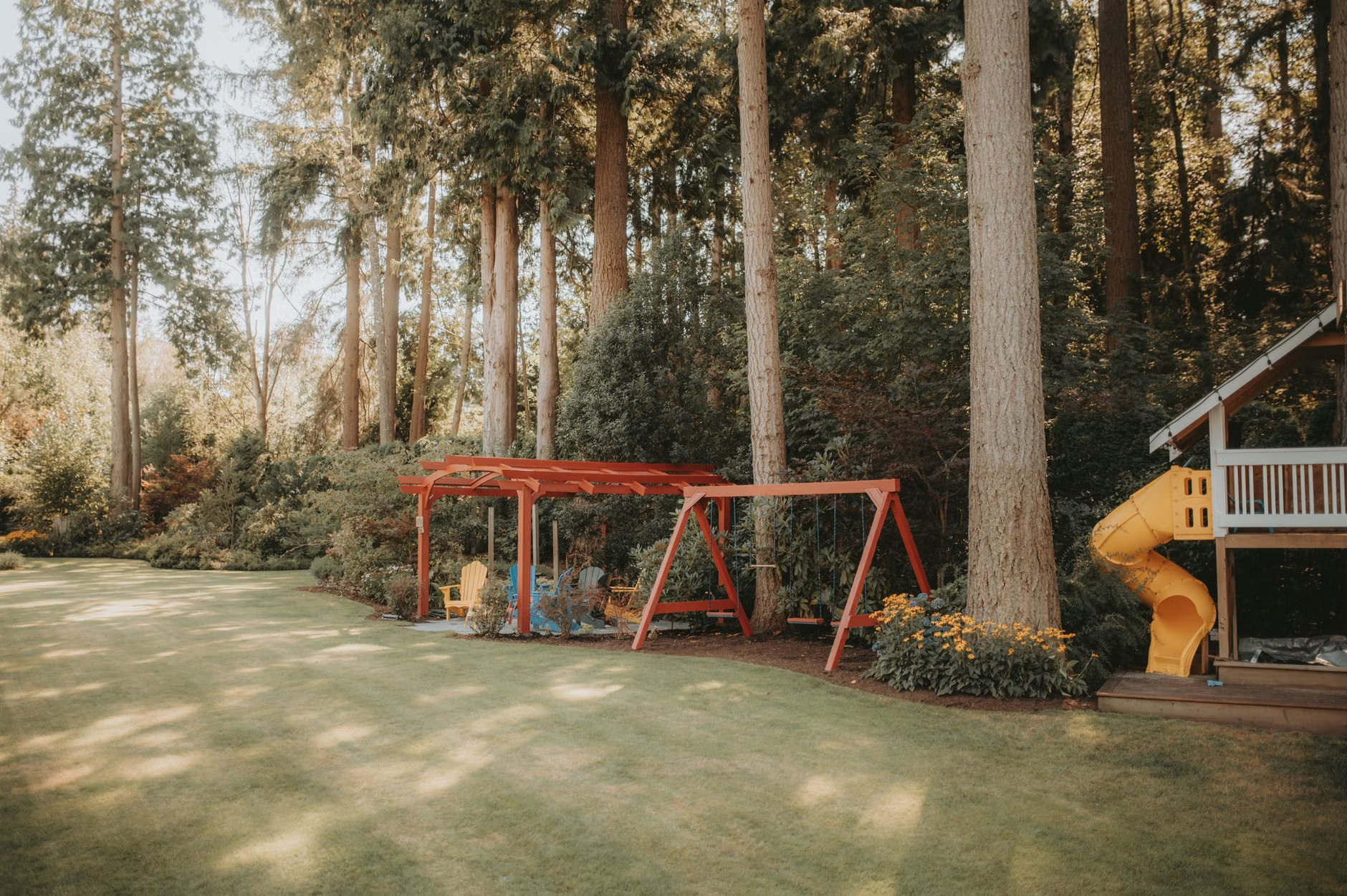
Backyards work better for families when they have simple zones. The active zone is for running, climbing, kicking a ball, or using a swing set. The quiet zone can be for chalk, reading, sand, or water play with supervision. The adult-use zone should hold grills, fire pits, sharp tools, fuel, and maintenance supplies.

The goal is not a perfect landscape plan. It is reducing the number of moments when a fast-moving child crosses into an area designed for heat, blades, chemicals, or heavy equipment.

Backyard with a swing set on mulch, open grass for play, and a separate patio grilling area
A kid-friendly yard works best when active play space is clearly separated from cooking and maintenance areas. Credit: Photo by Luke Miller on Pexels. Source: Pexels.

If the yard has a playset, pay more attention to what is under and around it than to the playset itself. Large home playground equipment should be anchored securely, swings need clearance from walls and fences, and the landing area should use impact-absorbing material rather than bare dirt or ordinary grass. The American Academy of Pediatrics and the CPSC both emphasize soft surfacing, regular checks for loose hardware and sharp edges, and a clear fall zone around equipment. (healthychildren.org)

The adult-use area deserves real separation, not just a verbal rule. Grills and fire pits should not sit beside the soccer goal. Lawn mowers, trimmers, gasoline cans, and outdoor chemicals should not be stored where children pass through on the way to play. The AAP also advises keeping children away while mowing and storing lawn chemicals out of reach. (healthychildren.org)

Treat water, trampolines, and bare soil as separate safety decisions

Warning

If the backyard includes a pool, spa, pond, or trampoline, decluttering alone is not enough. Those features need their own barriers, rules, and supervision plan.

Water needs the strictest standard. The CDC says most drownings among children ages 1 to 4 happen in swimming pools, and proper pool fencing helps prevent unsupervised access. The AAP recommends constant, touch-level supervision around pools, hot tubs, ponds, and similar water features, along with a four-sided fence and a self-closing, self-latching gate. Swimming lessons and alarms can help, but they do not replace barriers or close supervision. (cdc.gov)

Close-up of a self-latching gate on a backyard pool fence
Water features need barriers that work even when adults are distracted for a moment. Credit: Photo by Vladimir Srajber on Pexels. Source: Pexels.

Trampolines are another feature that parents often underestimate. Nets and pads may reduce some injuries, but they do not turn a trampoline into a low-risk backyard extra. The AAP recommends against home trampolines; if a family keeps one anyway, the minimum rules are one jumper at a time, no flips, full padding, active adult supervision, and enough clearance from trees, fences, and garages. (healthychildren.org)

Bare dirt is an overlooked issue, especially in older yards. The EPA notes that lead levels can be higher in soil near older painted buildings, roadways, industrial areas, and some older playground equipment. If children dig or play in soil often, covering bare patches with clean mulch or grass, using clean soil in raised beds or bins, and washing hands after play can reduce exposure. On a property with a possible history of contamination, a lab soil test is more useful than guessing. (epa.gov)

Small routines matter more than one big makeover

A backyard usually gets safer through maintenance, not a single shopping trip. A quick reset before outside play helps: latch the gate, scan for standing water, put tools away, check that mulch has not thinned under climbing areas, and look for broken branches or loose hardware after storms. If the space is easy to supervise and easy to tidy, safety habits are much more likely to stick.

The most kid-friendly backyard is not the fanciest one. It is the one where play has room, hazards are harder to reach, and adults do not have to rely on luck to keep children safe.

References

  1. American Academy of Pediatrics – Playing Outside in the Yard: 8 Tips to Keep it Fun & Safe for Kids – https://www.healthychildren.org/English/safety-prevention/at-home/Pages/Backyard-Safety.aspx
  2. U.S. Consumer Product Safety Commission – Home Playground Safety Checklist – https://www.cpsc.gov/safety-education/safety-guides/playgrounds/home-playground-safety-checklist
  3. Centers for Disease Control and Prevention – Risk Factors for Drowning – https://www.cdc.gov/drowning/risk-factors/index.html
  4. U.S. Environmental Protection Agency – Lead in Soil – https://www.epa.gov/lead/lead-soil

Leave a Reply

Your email address will not be published. Required fields are marked *