
Skip to content

Best Outdoor Lighting Ideas for a Warm and Inviting Backyard

A welcoming backyard rarely comes from one bright fixture. The best setups use warm, layered light that makes seating areas comfortable, paths easy to follow, and the yard feel alive after dark without turning it into a
6 minute read By Daniel Carter 0 comments

The most inviting backyards are not the brightest ones. They are the ones where light falls in the right places: over a table, beside a chair, along a step, and on one or two features that give the yard depth after sunset. If a backyard feels flat or harsh at night, the problem usually is not a lack of fixtures. It is too much light in the wrong form, or one overly bright source trying to do every job at once.

Start with layered light instead of one big flood

A warm backyard usually needs three kinds of light working together: a soft ambient glow for the overall mood, practical light for walking and eating, and a small amount of accent lighting for shape and texture. That might mean one overhead source near the dining area, lower light near paths or steps, and a single uplight on a tree or planting bed. DarkSky’s home guidance is useful here: use only as much light as needed, direct it where it is needed, and favor fully shielded fixtures and warm color temperatures (darksky.org).

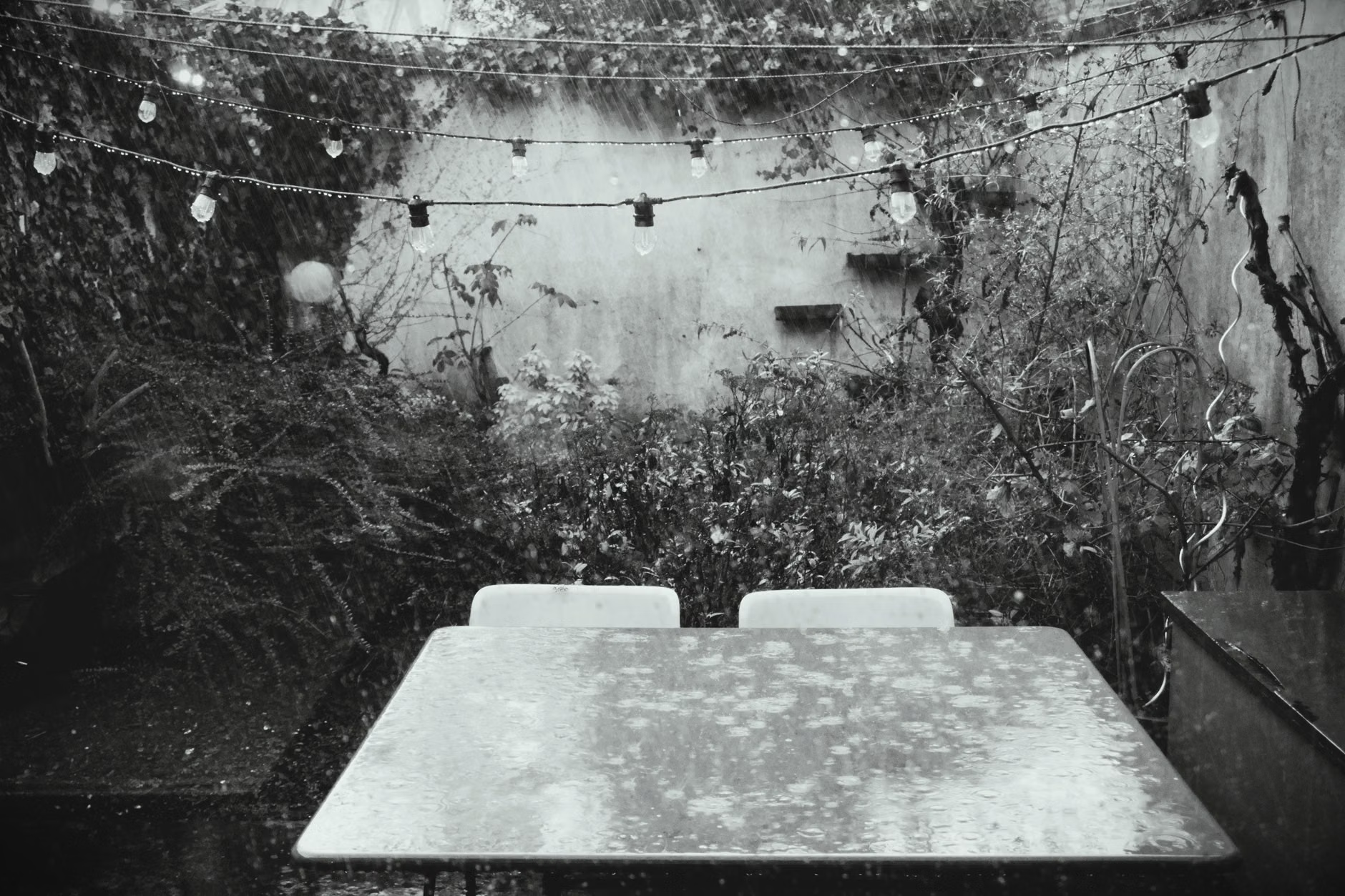
  • String lights stretched over a pergola, between posts, or across one defined zone create a soft ceiling and make a patio feel like a room.
  • Path and step lights work best when they mark movement, especially turns, stairs, and the route from the back door to seating. They do not need to trace every edge of the yard.
  • A single uplight aimed at a mature tree, tall ornamental grass, or textured fence often adds more atmosphere than several extra fixtures around the perimeter.
  • Portable rechargeable lanterns or table lamps help lounge areas feel intentional and relaxed, especially when overhead light would otherwise be too strong.
A backyard dining area with warm string lights overhead and subtle landscape lighting around the patio
A layered setup works best when overhead glow, path visibility, and gentle accents all support the same seating zone. Credit: Photo by Budget Bizar on Pexels. Source: Pexels.

Color matters as much as fixture style. For spaces meant for conversation and dining, warm light usually feels more natural than cooler blue-white light. The Department of Energy describes lower Kelvin values as warmer in appearance, and DarkSky recommends 2700K or lower for the most night-friendly home outdoor lighting. That range is a good place to start if the goal is comfort rather than a crisp, commercial look (darksky.org).

Match the fixture to the backyard zone

Backyard lighting gets better when each area has a clear job. Dining spaces need light that makes plates, glasses, and faces easy to see. Lounge spaces usually feel better with indirect light that stays out of eye level. Paths and stairs need visibility at foot level. A grill or prep counter may need stronger task light than the rest of the patio. When comparing bulbs, shop by lumens rather than watts, because brightness is measured in lumens and wattage reflects energy use (energystar.gov).

  • For a dining area, use a pendant, string lights, or a nearby wall fixture that centers light over the table instead of blasting the whole yard.
  • For a seating area, choose softer side lighting, lanterns, or dimmable fixtures so the space stays flattering and calm.
  • For planting beds and borders, use accent lights sparingly. One or two focal points are usually enough to keep the yard from disappearing into darkness.
  • For security, it often helps to separate bright motion lighting from the entertaining area so the backyard can feel welcoming when occupied and more alert when empty.
A backyard path illuminated by low shielded lights leading toward a seating area
Path lighting should guide movement and mark level changes without outlining every edge of the yard. Credit: Photo by Alexander Nadrilyanski on Pexels. Source: Pexels.

A simple hypothetical example shows the difference. On a modest patio, one strand of warm string lights above the table, two low lights near the steps, and one accent light on a tree can feel far richer than six bright fixtures mounted around the fence line. The first approach creates layers and depth. The second mostly creates glare and empty brightness.

Plan the layout at dusk before buying more fixtures

  1. Go outside at dusk and identify only three priorities: the route people walk, the place they sit, and one feature worth highlighting.
  2. Light the walking route first, especially stairs, level changes, and transitions from the door to the patio.
  3. Add one source for the social zone, such as string lights over a table or a shaded wall light near seating.
  4. Introduce one accent light and then stop. If the yard already feels comfortable, more fixtures may only flatten the scene.
  5. Walk the space and sit down in the chairs. If the bulb itself is visible and uncomfortable from normal seating height, the fixture is probably too exposed or too bright.

This dusk test is important because outdoor lighting is often chosen from close range in a store or on a product page, but it is experienced from across the yard. What looks subtle on a shelf can be glaring at eye level. If the setup feels almost right, try lowering the output, changing the bulb color, or moving one fixture before adding more hardware. A dimmer or separate switching can be more valuable than another light source.

A backyard tree illuminated by one warm uplight while surrounding areas remain softly shadowed
One well-placed accent light can add more depth than several bright fixtures scattered around the yard. Credit: Photo by Marius-Laurentiu Butan on Pexels. Source: Pexels.

Make sure the inviting look is also durable and safe

Outdoor lighting still has to survive the weather. UL’s guidance distinguishes between dry, damp, and wet locations, which matters more than many homeowners realize. A covered ceiling over a porch may qualify differently from an exposed fence post or open pergola beam. Use fixtures and replacement bulbs clearly marked for the environment they will face, and avoid treating extension-cord solutions as permanent backyard wiring. If a better layout requires a new outdoor circuit or hardwired fixtures, local code requirements and a licensed electrician are worth considering (code-authorities.ul.com).

Warning

A harsh security flood aimed across a patio can make a backyard feel less welcoming, not more. Strong light at eye level often creates glare, which can make people more noticeable while making the space itself less comfortable.

The best backyard lighting is closer to hospitality than decoration. Start with the chair, the path, and the table. Keep the light warm, aim it carefully, and leave some darkness between zones. A backyard does not need to look fully lit to feel complete. It needs to feel easy to use and pleasant to stay in.

References

  1. DarkSky International – Home Outdoor Lighting Assessment – https://darksky.org/get-involved/home-lighting-assessment/
  2. ENERGY STAR – Learn About Brightness – https://www.energystar.gov/products/learn-about-brightness
  3. U.S. Department of Energy – Purchasing Energy-Efficient Light Bulbs – https://www.energy.gov/cmei/femp/purchasing-energy-efficient-light-bulbs
  4. UL Solutions Code Authorities – Luminaires Marking and Application Guide – https://code-authorities.ul.com/wp-content/uploads/2014/09/Luminaires_MG.pdf

Leave a Reply

Your email address will not be published. Required fields are marked *